
Power Electronics Housings
Aluminum housings and structural components for power-conversion, inverter and energy-control equipment.
Aluminum Housings & Enclosures →NEW ENERGY & ENERGY STORAGE
FSD Precision supports drawing-based manufacturing for new energy and energy storage equipment, including power electronics housings, thermal-management components, structural metal parts and engineering plastic components. Manufacturing routes can be reviewed according to component geometry, material, thermal requirements, assembly interfaces and production needs.
COMPONENT COVERAGE
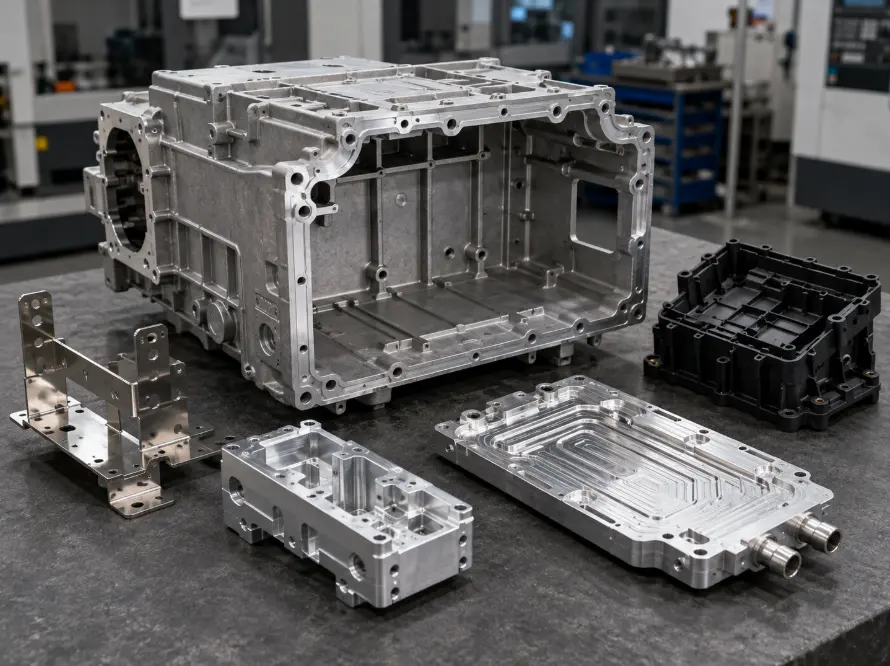
FSD supports drawing-based custom components used in power electronics, thermal-management assemblies, energy storage equipment and related structural systems. Component requirements are reviewed according to geometry, material, interfaces, manufacturing route and downstream operations.
Aluminum housings and structural components for power-conversion, inverter and energy-control equipment.
Aluminum Housings & Enclosures →Machined and cast aluminum components for heat dissipation, thermal interfaces and housing-related thermal structures used in energy storage equipment.
Heat Sinks & Thermal Components →Custom brackets, supports, covers and structural components for battery-related equipment.
Stamped Metal Parts →Machined aluminum housings, cold-plate-related structures and cooling-interface components for liquid-cooling assemblies used in energy storage equipment.
Liquid Cooling Components →CNC machined metal parts requiring controlled mounting surfaces, holes and assembly interfaces.
CNC Machined Parts →Injection molded housings, covers, supports and functional plastic parts for energy equipment.
Injection Molded Parts →APPLICATION AREAS
Custom components can be reviewed for energy storage equipment, power electronics, thermal assemblies and related structural systems.
Components for battery storage equipment and supporting assemblies.
Housings and structural parts for inverter, converter and power-control equipment.
Components supporting cooling, heat transfer and temperature-control assemblies.
Custom metal and plastic parts for charging and power-distribution related equipment.
Structural, housing and thermal components used in related new-energy equipment.
Custom components for industrial energy-management and power equipment.
MANUFACTURING CONSIDERATIONS
Energy storage component manufacturing depends on more than overall size. Thermal management, structural strength, enclosure geometry, electrical equipment interfaces, mounting surfaces, material, environmental requirements, production quantity and assembly interfaces can all influence the manufacturing route. A housing may need die casting for an aluminum structure, followed by CNC machining for precision surfaces. Brackets and covers may suit metal stamping, while functional plastic parts may require injection molding. Secondary machining and surface finishing can also affect how the component is prepared for assembly.
MANUFACTURING ROUTES
For aluminum power-electronics housings, structural enclosures and suitable thermal-management components.
View Die Casting →For precision interfaces, cooling-related components, housings and complex machined metal parts.
View CNC Machining →For brackets, covers, mounting structures and formed sheet-metal components.
View Metal Stamping →For engineering plastic housings, supports, covers and functional molded components.
View Injection Molding →MULTI-PROCESS COMPONENTS
Power-electronics housings may require secondary machining for mounting surfaces, bores, assembly interfaces and precision features.
Machined aluminum components may require downstream surface treatment according to the application and assembly requirements.
Plastic housings and supports can incorporate inserts or mounting hardware where required by the assembly.
For components that require several connected operations, FSD can review multi-process manufacturing support around the drawing and downstream requirements.
THERMAL MANAGEMENT
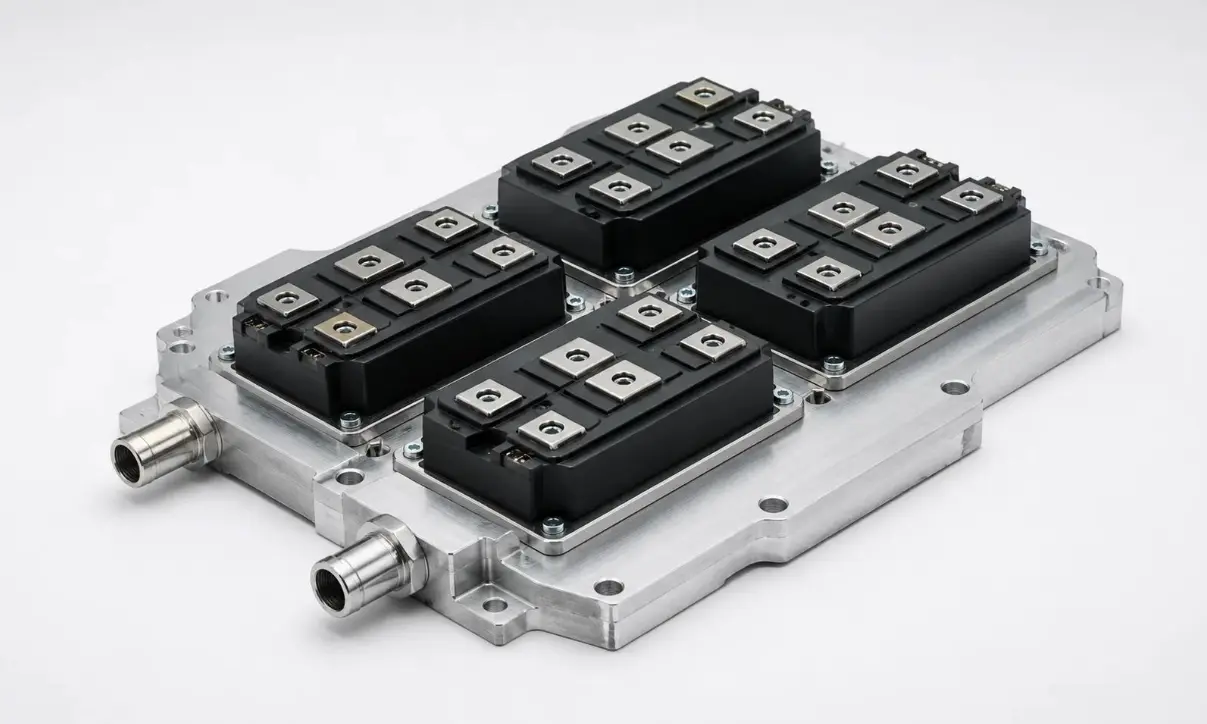
Machined surfaces and component interfaces can be reviewed according to thermal assembly requirements.
Aluminum components can be manufactured for cooling-related structures and assemblies.
Housing geometry and thermal-management requirements can be considered together during manufacturing review.
Cast or formed components can receive precision machining where cooling or assembly interfaces require it.
PROJECT WORKFLOW
2D drawings, 3D models and project requirements are reviewed.
Outcome: Requirements aligned
Geometry, material, interfaces and manufacturing route are reviewed.
Outcome: Manufacturing route defined
Required tooling and production preparation are coordinated.
Outcome: Production preparation completed
Initial components are produced for project review.
Outcome: Samples prepared
Relevant dimensions, interfaces and project requirements are reviewed.
Outcome: Requirements verified
Approved requirements move into repeat manufacturing and supply.
Outcome: Production coordinated
Projects that need tooling, validation and repeat supply can also be reviewed through tooling-to-production support.
QUALITY CONTROL
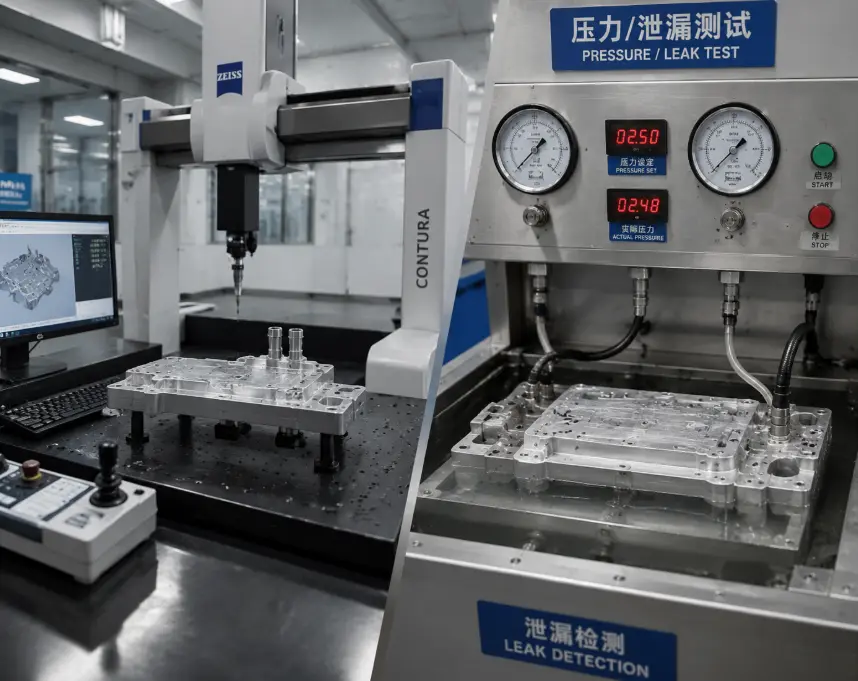
Dimensions and relevant features are reviewed against approved drawings.
Mounting surfaces, holes and component interfaces can be checked according to project requirements.
Cooling-related and assembly interfaces can be reviewed according to drawing requirements.
Relevant appearance and surface requirements are reviewed before delivery.
MATERIAL OPTIONS
Suitable for power-electronics housings, thermal components, structural parts and machined components.
Suitable for brackets, structural parts and selected formed or machined components.
Suitable for applicable stamped and supporting structural components.
Suitable for molded housings, covers, supports and functional plastic components.
RFQ INPUTS
| Project Information | What We Review |
|---|---|
| 2D Drawings | Dimensions, critical features and interface requirements |
| 3D Models | Geometry and manufacturing feasibility |
| Material | Compatibility with the intended manufacturing route |
| Estimated Quantity | Production-stage and process considerations |
| Surface Requirements | Relevant downstream finishing needs |
| Thermal Requirements | Cooling-related component and interface considerations |
| Assembly Requirements | Interfaces, inserts and mounting needs |
| Current Project Stage | Prototype, validation, supplier transfer or repeat-production context |
PROJECT TYPES
Drawing-based custom components for new-energy and power equipment.
Cast or machined aluminum housings requiring manufacturing and downstream review.
Cooling-related housings, interfaces and aluminum components for energy storage equipment.
Existing components being reviewed for manufacturing transfer or alternate supply.
Components requiring several connected manufacturing stages before final supply.
Approved components requiring continued manufacturing and project follow-up.
WHY FSD
Different processes can be reviewed according to the actual component requirements.
Project discussions remain centered on drawings, models and component requirements.
Housing, structural and thermal-related component requirements can be considered together during manufacturing review.
Engineering feedback, revisions, samples and production requirements can remain connected through the project.
For drawing revisions, engineering communication and ongoing production follow-up, see OEM Project Coordination.
FAQ
FSD can review drawing-based metal and plastic components such as aluminum housings, thermal-management components, liquid cooling components, structural parts, machined parts, stamped parts and molded plastic parts.
Yes. Aluminum housings can be reviewed according to drawings, geometry, material requirements, assembly interfaces and the intended manufacturing route.
Yes. Die cast housings may receive secondary CNC machining where mounting surfaces, holes, bores or assembly interfaces require additional processing.
FSD can review aluminum components for cooling-related structures, liquid-cooling assemblies, housing interfaces and thermal-management component requirements.
Please send available 2D drawings, 3D models, material, estimated quantity, surface requirements, thermal requirements, assembly requirements and current project stage.
After sample review and project approval, repeat production requirements can be coordinated according to the approved drawings and manufacturing route.
START YOUR PROJECT
Send us your available drawings, 3D models and project requirements. We can review component geometry, material, thermal and assembly requirements, manufacturing route and downstream operations before preparing the next manufacturing steps.