
Geometry
Is the part block-like, cylindrical, thin-sheet, housing-based, molded or cast in form?
PROCESS SELECTION GUIDE
Compare CNC machining, die casting, injection molding, metal stamping and tooling routes by geometry, material, quantity, critical dimensions, surface requirements and production plan.
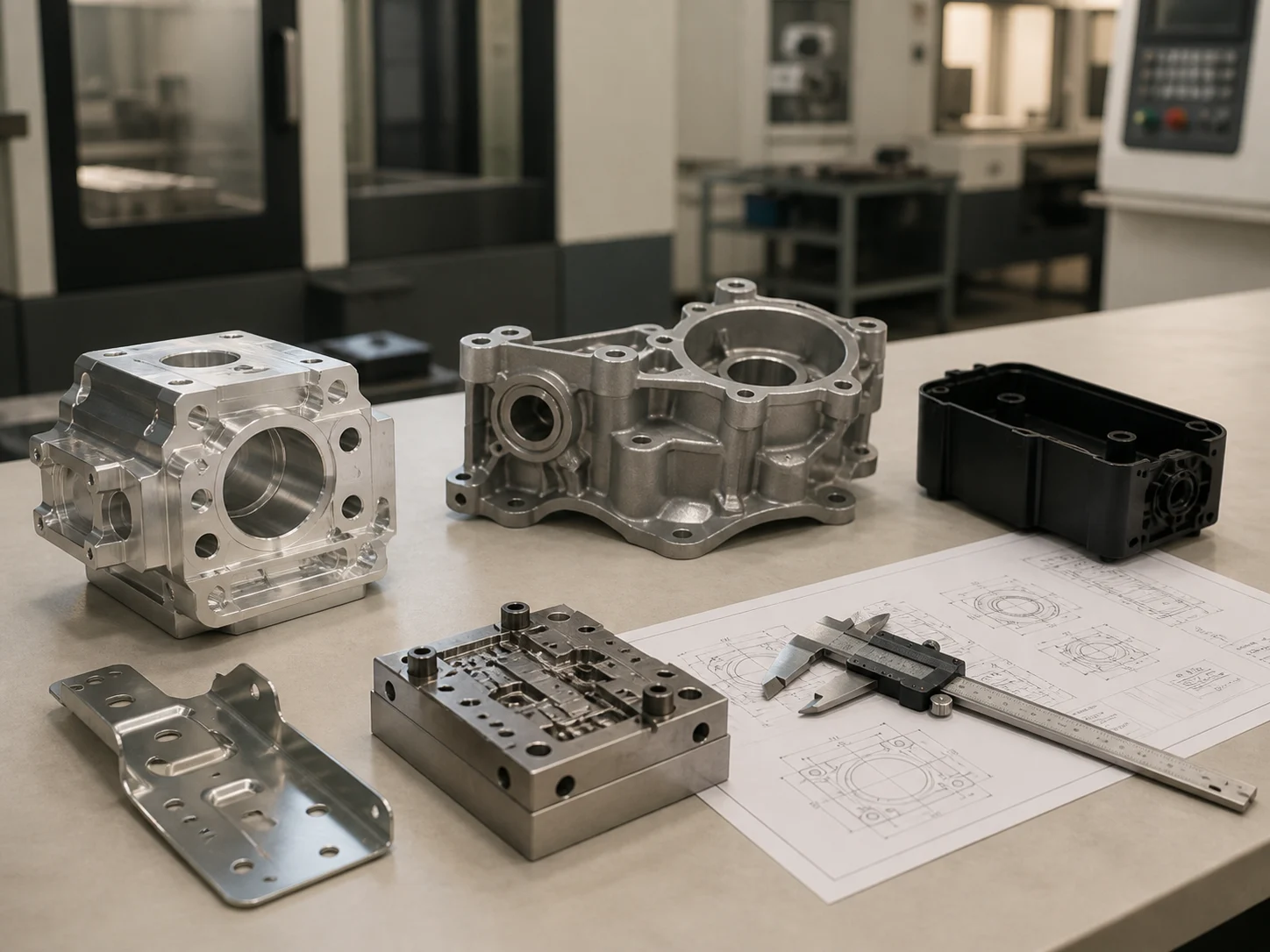
PART REQUIREMENTS
Early process screening should begin with the drawing requirements before a manufacturing route is assumed.
Is the part block-like, cylindrical, thin-sheet, housing-based, molded or cast in form?
Metal, plastic and specific material families can narrow the realistic process routes.
Prototype, low-volume and repeat production may require different process and tooling decisions.
Identify the interfaces, holes, surfaces and dimensions that directly affect function or assembly.
Appearance, protection, contact surfaces and downstream finishing should be reviewed early.
Determine whether the project is for validation, pilot production or long-term repeat production.
PROCESS SCREENING
Each process family should be treated as a starting point for engineering review, not a guaranteed final route.
Typical Starting Point:
Machined geometry, prototypes, precision interfaces and lower dedicated tooling commitment.
Typical Starting Point:
Metal housings and repeat production where tooling-defined cast geometry should be reviewed.
Typical Starting Point:
Plastic parts and repeat production where molded geometry and dedicated tooling are appropriate.
Typical Starting Point:
Sheet or strip parts such as brackets, covers, clips, shields and formed components.
Typical Starting Point:
Dedicated tooling development, trial, validation, modification and production handoff.
PROCESS COMPARISON
Use this table to screen review priorities before moving into detailed DFM, costing or quotation.
| Factor | CNC Machining | Die Casting | Injection Molding | Metal Stamping |
|---|---|---|---|---|
| Typical Geometry | Machined features | Cast 3D shapes | Molded plastic parts | Sheet / formed parts |
| Material Form | Block / bar / plate | Metal alloy | Plastic resin | Sheet / strip |
| Tooling | Lower commitment | Dedicated die | Dedicated mold | Tooling-dependent |
| Production Fit | Prototype to repeat production | Repeat production | Repeat production | Repeat production |
| Main Review Focus | Tolerance / tool access | Draft / walls / tooling | Draft / gate / walls | Thickness / bends / holes |
GEOMETRY DECISION
Geometry can suggest a recommended starting route, while final suitability should still be confirmed against the drawing and project requirements.
Parts with milled, turned, drilled or closely controlled interface features may start with CNC review.
Metal housings with cast walls, ribs, bosses and post-machining areas may start with die casting review.
Plastic parts with molded ribs, clips, bosses, shutoffs or appearance surfaces may start with injection molding review.
Sheet-based geometry with pierced, bent or formed features may start with stamping review.
Projects that require mold design, machining, trial, correction and handoff may start with tooling development review.
PRODUCTION STAGE
Design maturity and production planning can change which route should be reviewed first.
Focus on geometry, functionality and engineering revision flexibility. CNC Machining may often be reviewed when geometry still needs validation, depending on material and part requirements.
Sample validation, assembly, inspection and tooling decisions should be reviewed before the route is fixed.
Die Casting, Injection Molding, Metal Stamping and Production Tooling may be re-evaluated against the production plan.
Revision risk should be reviewed before committing to dedicated tooling.
TOOLING DECISION
The route decision often depends on whether the project needs revision flexibility or dedicated production tooling.
May provide greater flexibility for geometry review, prototype work and engineering revisions before dedicated tooling is committed.
Tooling should be evaluated against design maturity, expected quantity, repeat production and validation requirements.
Tooling should be evaluated against design maturity, expected quantity, repeat production and validation requirements.
Tooling should be evaluated against design maturity, expected quantity, repeat production and validation requirements.
Supports mold design, manufacturing, trial, correction, validation and production handoff.
The final tooling route and manufacturing process depend on drawing requirements, material, quantity, design maturity and validation needs.
MATERIAL MATCH
Final process suitability depends on material grade, geometry, quantity, drawing requirements and production plan.
| Material | CNC Machining | Die Casting | Injection Molding | Metal Stamping |
|---|---|---|---|---|
| Aluminum | Common | Common | — | Selected |
| Zinc Alloy | Secondary | Common | — | — |
| Stainless Steel | Common | — | — | Common |
| Carbon Steel | Common | — | — | Common |
| Copper & Brass | Common | — | — | Project Review |
| Engineering Plastics | Common | — | Common | — |
DFM QUESTIONS
These questions help connect part requirements with realistic manufacturing routes before RFQ review.
Material choice can narrow the process routes that should be reviewed.
Interfaces, holes and mating surfaces should be identified early.
Geometry is often the first practical screening factor.
Revision maturity affects the risk of committing to dedicated tooling.
Quantity should be reviewed together with validation and tooling needs.
Post-processing can influence the realistic manufacturing route.
PROCESS GUIDE
Use the process-specific guides after the first screening pass to review DFM considerations in more detail.
Review machining geometry, tool access, setup and drawing requirements.
Read GuideReview cast metal geometry, draft, walls, tooling and post-machining areas.
Read GuideReview plastic part geometry, draft, wall, gate, molding and tooling considerations.
Read GuideReview sheet part thickness, bends, holes, burrs, forming and tooling route.
Read GuideReview mold design, manufacturing, trial, correction, validation and production handoff.
Read GuidePROCESS SELECTION FAQ
Start with the drawing, geometry, material, quantity, critical dimensions, surface requirements and production stage. The process should be screened against the project requirements before quotation.
CNC machining may be reviewed for machined geometry, prototypes, precision interfaces, lower dedicated tooling commitment and projects where design revisions are still being evaluated.
Die casting may be reviewed for metal housings and repeat production where cast geometry, draft, wall thickness, tooling and secondary machining requirements can be confirmed.
Injection molding may be suitable when the part is plastic, the geometry supports molded features and dedicated tooling can be evaluated against repeat production requirements.
Metal stamping may be reviewed for sheet or strip parts such as brackets, covers, clips, shields and formed components, depending on thickness, bends, holes, burr control and tooling route.
Production volume affects whether flexibility, dedicated tooling, validation and repeat output should be prioritized. Final suitability depends on the drawing, material, quantity and production plan.
Yes. Metal, plastic and specific material families can narrow realistic process routes. Material grade, geometry and project requirements should be reviewed together.
Provide drawings or 3D files, material, quantity, critical dimensions, surface requirements, application and production stage so the manufacturing route can be reviewed against your project requirements.
Send your drawing, material, quantity, critical dimensions, surface requirements and application so the manufacturing route can be reviewed against your project requirements before quotation.