
Mechanical Use
Carbon steel may be reviewed for shafts, spacers, brackets, plates and mechanical components where functional load matters.
CARBON STEEL MATERIAL GUIDE
Carbon steel is used across machined, stamped and formed components where mechanical requirements, geometry, production route, surface protection and cost considerations need to be reviewed together. This guide explains how common carbon steel materials differ and how to connect material choice with CNC machining, stamping, finishing and RFQ preparation.
MATERIAL OVERVIEW
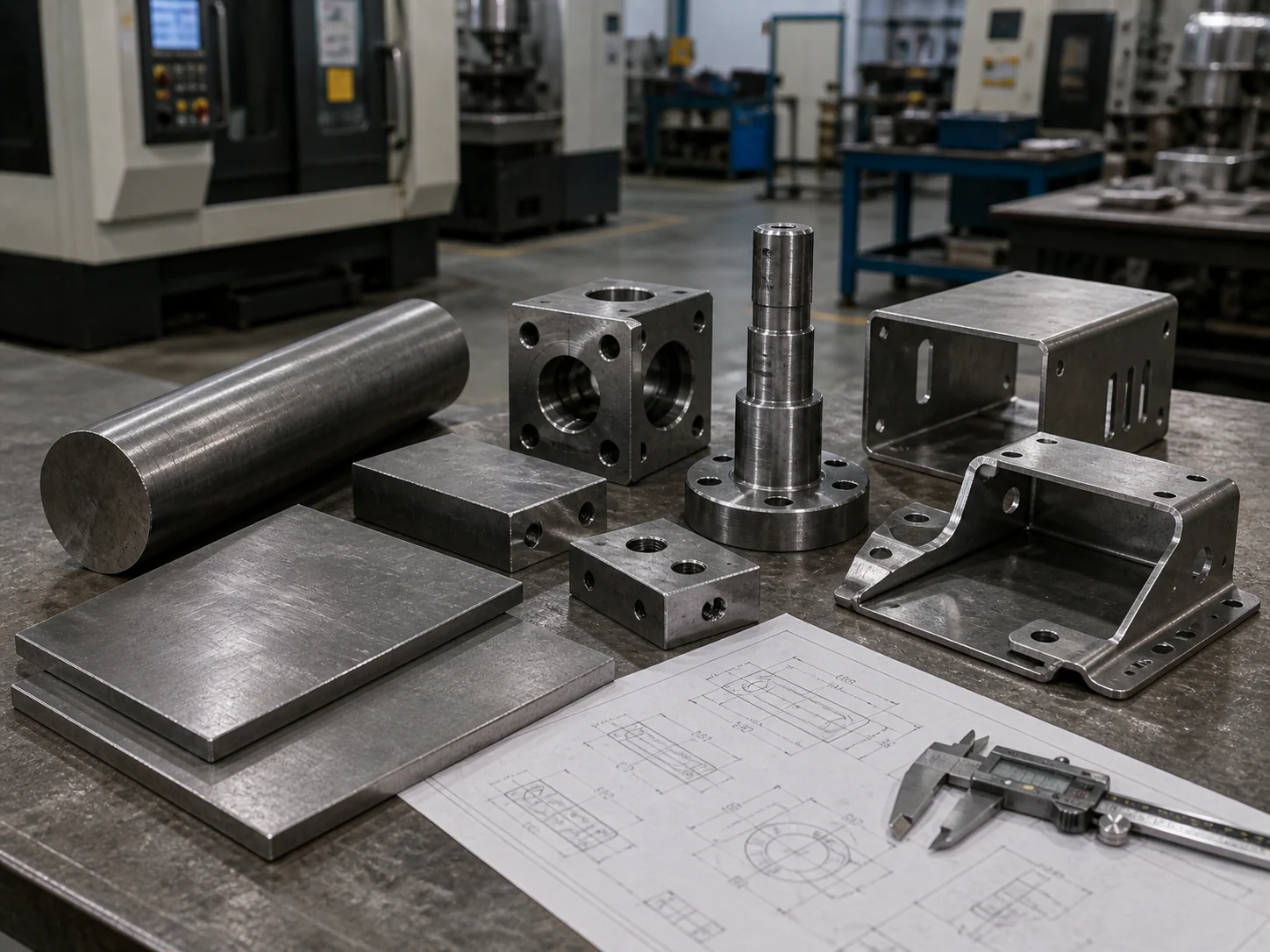
Carbon steel is often reviewed for drawing-based parts where strength, machinability, forming behavior, surface protection and cost structure all matter. Final suitability depends on grade, condition, geometry, process route and finishing requirements.
Carbon steel may be reviewed for shafts, spacers, brackets, plates and mechanical components where functional load matters.
Machining-oriented carbon steel references can support turned components, blocks, holes, threads and mounting features.
Sheet-oriented references can be reviewed for brackets, covers, clips, plates and formed components.
Carbon steel may be worth reviewing where project requirements allow protective finishing and the design favors steel parts.
Surface condition and corrosion protection should be considered early because carbon steel often needs finishing review.
Material selection should connect CNC machining, stamping, forming, secondary operations and inspection expectations.
COMMON CARBON STEEL MATERIALS
Carbon steel material selection should consider manufacturing route, geometry, mechanical requirements, surface protection, material condition and project requirements.
| Material | Typical Manufacturing Route | General Characteristics | Common Applications / Part Types |
|---|---|---|---|
| 1018 | CNC machining / turning | Machining-oriented carbon steel reference commonly reviewed for general machined components and turned parts. | Shafts, spacers, pins, blocks, mounting parts and mechanical components. |
| 1045 | CNC machining / turning | Mechanical component reference commonly reviewed where higher load or wear-related requirements need review. | Shafts, collars, pins, mechanical components with higher load or wear-related requirements and turned components. |
| SPCC | Stamping / sheet forming | Sheet and stamping reference reviewed for formed parts where geometry, bends, holes and surface requirements matter. | Brackets, covers, plates, clips and general stamped sheet components. |
| SECC | Stamping / sheet forming | Sheet and stamping reference commonly reviewed where formed geometry and surface condition are part of the project. | Stamped covers, brackets, plates, shields and formed components. |
The materials shown are common carbon steel manufacturing references. Final material availability, condition and manufacturing suitability should be confirmed for the specific project.
MATERIAL CATEGORIES
For custom manufacturing review, carbon steel can be separated into machining-oriented references and sheet or stamping references. This helps connect material choice with the production route rather than treating carbon steel as one generic option.
1018 and 1045 are reviewed in CNC machining and turning contexts where shafts, spacers, blocks, threaded features or mechanical components are required.
SPCC and SECC are reviewed for sheet, stamping and forming routes where bends, holes, flanges, covers and bracket geometry matter.
1018 or 1045 may be worth reviewing depending on geometry, loading, threads and machining requirements.
SPCC or SECC may be worth reviewing depending on sheet geometry, forming needs and surface requirements.
MATERIAL SELECTION
The appropriate carbon steel material depends on the part rather than the material name alone. Manufacturing route, mechanical requirements, surface protection, critical interfaces, quantity and drawing requirements should be reviewed together.
CNC machining and stamping usually point to different carbon steel references and material forms.
Loads, wear-related needs and assembly function can influence whether a machining-oriented material should be reviewed.
Bends, flanges, holes, slots and springback-related concerns should be reviewed for sheet and stamping projects.
Carbon steel surface protection should be defined early when corrosion exposure, appearance or handling conditions matter.
Threads, holes, bores, mounting faces and mating features should be marked clearly on drawings.
Material availability and condition should be confirmed for the specific project before production planning.
CNC MACHINING
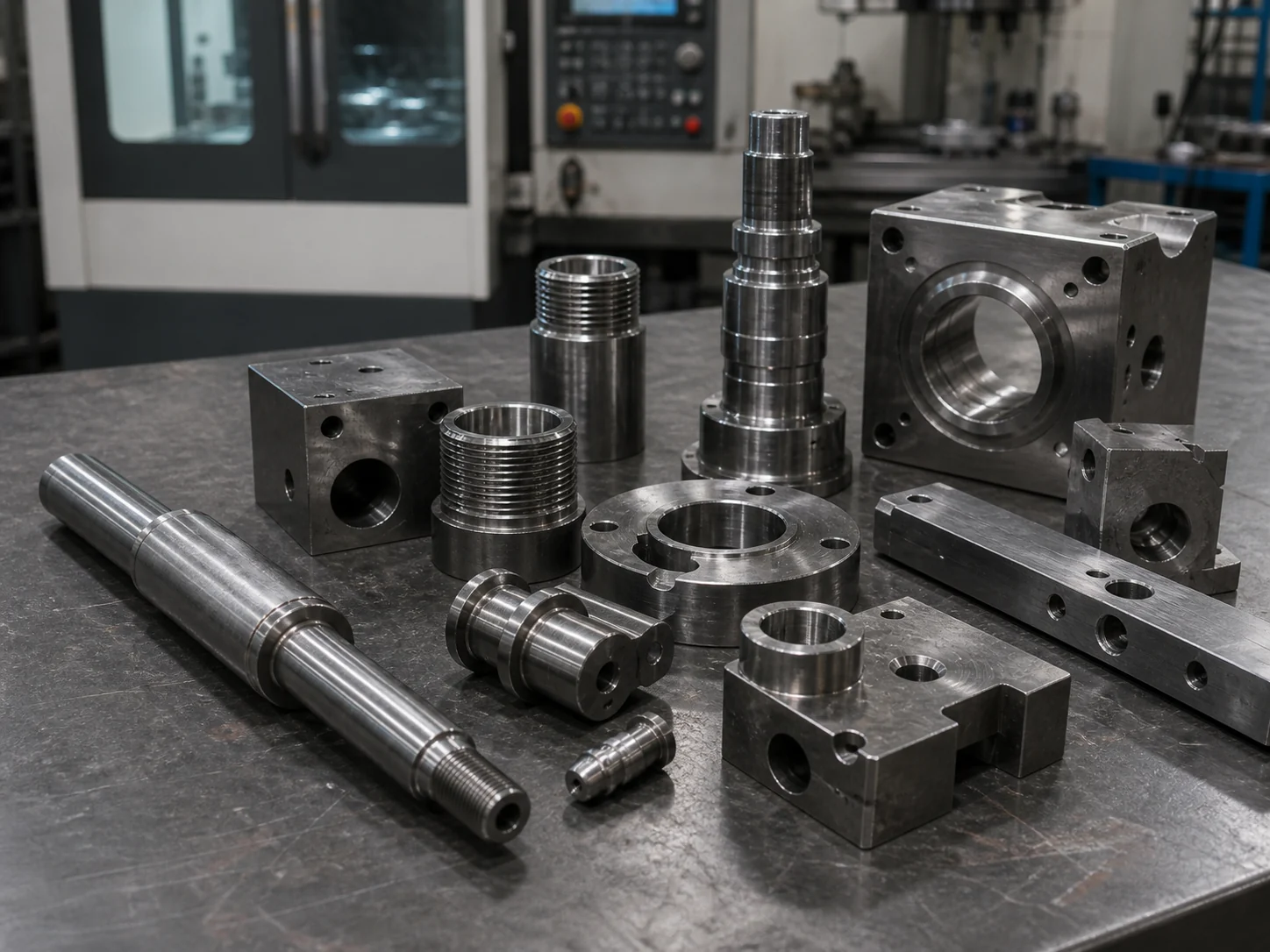
Carbon steel is commonly reviewed for CNC machined and turned components such as shafts, spacers, blocks, mounting parts, threaded parts and mechanical components. Material choice should be connected with tool access, critical dimensions, surface condition, threads and post-machining finishing needs.
1018 and 1045 are machining-oriented references for carbon steel parts, depending on geometry, function and project requirements.
Threads, bores, flat faces, shoulders, turned diameters and inspection features should be clear before quotation.
STAMPING & SHEET PARTS
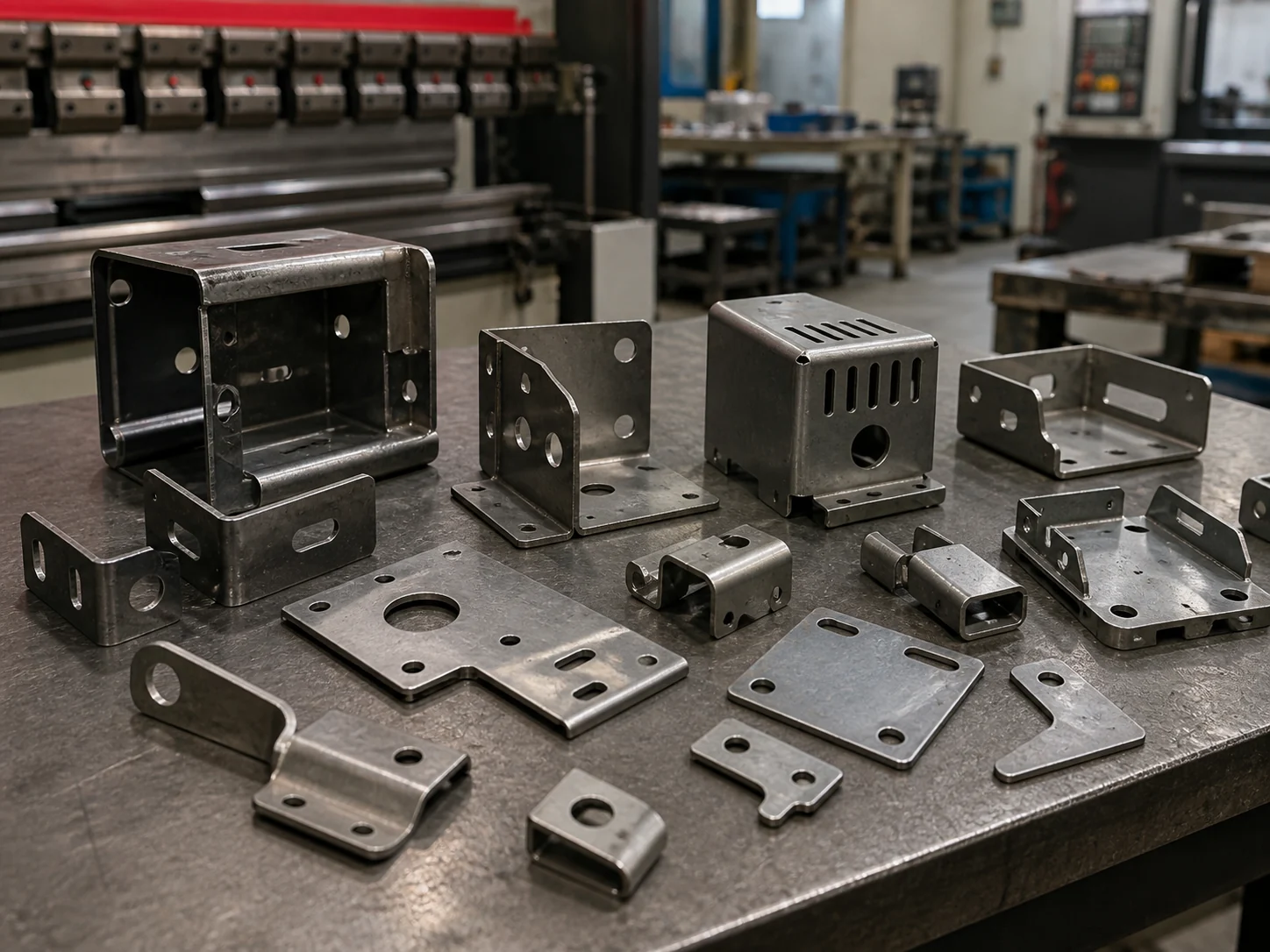
SPCC and SECC are sheet and stamping references for brackets, covers, plates, clips and formed components. The review should connect sheet condition, bend geometry, hole relationships, burr direction, surface condition and downstream finishing needs.
Bracket geometry should be reviewed for bends, holes, flanges and assembly loads.
Covers and plates may require surface, edge, flatness and hole-location review.
Small formed components should be reviewed for bend behavior, feature spacing and handling requirements.
DESIGN CONSIDERATIONS
Carbon steel part design should connect material form, manufacturing route, critical features, finishing expectations and inspection requirements.
Tool access and feature reach should be reviewed for deep pockets, internal shoulders, bores and small tools.
Thread depth, hole location, access and assembly requirements should be clearly defined on drawings.
Sheet and stamping parts should be reviewed for bend geometry, hole-to-bend relationships and formed features.
Mounting faces, mating surfaces, datums and fit-related features should be separated from general surfaces.
Appearance and handling surfaces should be identified early when machining marks, burrs or forming marks matter.
Areas needing coating, plating, painting or masking should be reviewed before the manufacturing route is confirmed.
SURFACE PROTECTION
Carbon steel surface condition and corrosion protection often need to be considered as part of the project. Finishing should be reviewed with material, geometry, appearance, handling and operating environment.
Plating may be reviewed where appearance, corrosion protection or functional surface requirements are part of the project.
Powder coating can be reviewed for selected steel parts when geometry and surface preparation support the route.
Painting may be considered where color, coverage or product-specific appearance requirements are important.
Deburring, cleaning and other surface preparation steps can affect downstream finishing quality and inspection.
MATERIAL COMPARISON
Carbon steel, stainless steel and aluminum each solve different manufacturing problems. The appropriate material depends on function, environment, geometry, process route and finishing expectations.
| Factor | Carbon Steel | Stainless Steel | Aluminum |
|---|---|---|---|
| Weight | May be reviewed when weight is not the primary constraint. | May be reviewed when corrosion resistance and metal performance are important. | May be reviewed where lower weight is a major requirement. |
| Corrosion Environment | Usually needs surface protection review for exposed environments. | Often reviewed where corrosion exposure is a key material driver. | May be paired with finishing when corrosion or appearance matters. |
| Mechanical Requirements | May fit shafts, brackets, plates and general mechanical components where steel properties and manufacturing route align with the project. | May fit parts requiring corrosion resistance plus mechanical performance. | May fit lighter housings, brackets and machined components. |
| Machinability | 1018 and 1045 may be reviewed for turned and machined features. | Grade choice affects machining behavior and surface requirements. | Often reviewed for efficient machining and broad alloy options. |
| Stamping / Forming | SPCC and SECC may be reviewed for stamped and formed sheet parts. | Sheet grade and forming needs should be reviewed together. | Sheet and formed parts may be reviewed where lower weight matters. |
| Surface Protection | Plating, coating or painting should be reviewed early. | Polishing, brushing or passivation review may be relevant by project. | Anodizing, coating, painting or polishing may be reviewed. |
| Cost Considerations | May be worth reviewing for suitable structural or mechanical steel parts. | Cost and grade availability should be reviewed against environment needs. | Cost depends on alloy, route, geometry and finishing requirements. |
| Typical Manufacturing Route | CNC machining, turning, stamping and sheet forming. | CNC machining, sheet forming, stamping and finishing review. | CNC machining, die casting, sheet forming and finishing review. |
MATERIAL TRADE-OFFS
Carbon steel can be practical for many machined, stamped and formed parts, but another material may be more suitable when environment, weight, appearance or functional requirements point elsewhere.
Stainless steel, aluminum or a protected finish route may be worth reviewing when corrosion exposure is a major requirement.
Aluminum or engineering plastics may be reviewed when reducing component weight is central to the design.
Material and finish choice should be reviewed together when cosmetic consistency or handling surfaces matter.
Electrical, thermal, wear or environmental requirements may point toward stainless steel, aluminum, copper alloys or plastics.
CONTINUE YOUR REVIEW
Use these resources to connect material choice with design, CNC machining, stamping, surface finishing and RFQ information.
Compare carbon steel with stainless steel, aluminum, copper alloys and plastics.
Open ResourceReview machining considerations for custom metal components.
Open ResourceReview geometry, tolerances, interfaces and manufacturing risk before quotation.
Open ResourcePrepare drawings, material, quantity, surface finish and critical feature information.
Open ResourceReview 1018, 1045, SPCC or SECC against route and function.
Connect CNC machining, turning, stamping or forming with finishing needs.
Share drawings, material notes, quantity, surface protection and critical features.
CARBON STEEL FAQ
Short answers for common carbon steel material and manufacturing questions.
1018 and 1045 are common carbon steel references to review for CNC machining and turning, depending on geometry, mechanical requirements, surface condition and project needs.
1018 is often reviewed for general machined and turned components, while 1045 may be reviewed where mechanical or wear-related requirements are more important. Final selection should follow the drawing and application requirements.
SPCC and SECC are sheet and stamping references commonly reviewed for brackets, covers, plates, clips and formed components. Geometry, surface condition and downstream finishing should be reviewed for the project.
Yes. Carbon steel sheet materials such as SPCC and SECC may be reviewed for stamped and formed parts when bend geometry, holes, burr direction, surface condition and finishing requirements are suitable.
Carbon steel surface protection often needs to be reviewed, especially when corrosion exposure, appearance, handling or storage conditions matter. Plating, coating, painting or surface preparation may be considered depending on the project.
Review corrosion environment, weight, mechanical requirements, machining or forming route, surface protection and cost considerations. The appropriate material depends on the part, application and production requirements.