
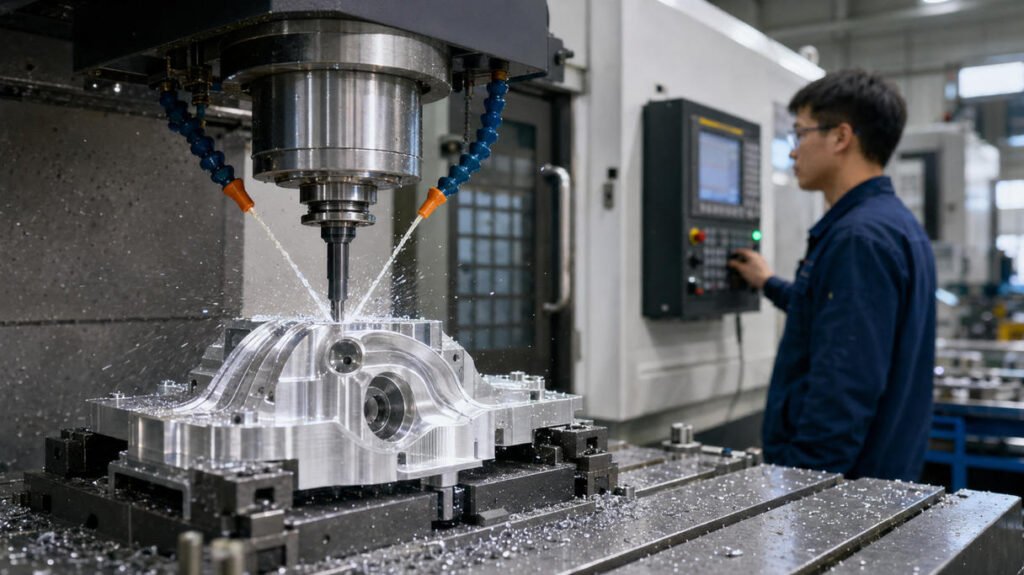
If you are sourcing CNC machined parts from China, the main challenge is not only finding a lower unit price. OEM buyers also need to confirm whether the supplier can review drawings, control key dimensions, recommend suitable materials, manage surface finishing, and provide inspection support before shipment.
FSD Precision provides CNC machining services for custom metal and plastic OEM parts, including CNC milling, CNC turning, drilling, tapping, surface finishing, inspection, packaging, and export-ready delivery.
Our CNC machining support is suitable for prototypes, low-volume trial orders, and repeat production projects based on customer drawings, 3D files, samples, or technical requirements.
Why OEM Buyers Choose CNC Machining
CNC machining is widely used when parts require accurate dimensions, stable quality, and reliable material performance. It is especially useful for projects where tooling is not required at the early stage, or where the buyer needs fast validation before moving into batch production.
For OEM buyers, CNC machining is often used for:
- Prototype validation
- Low-volume production
- Precision metal parts
- Engineering plastic parts
- Assembly-ready components
- Secondary machining after casting, molding, or extrusion
Unlike standard off-the-shelf parts, custom CNC machined parts must be reviewed according to drawing requirements, material selection, tolerance needs, surface finish, and application environment. A reliable supplier should help buyers identify possible manufacturing risks before production starts.
Typical CNC Machined Parts We Support
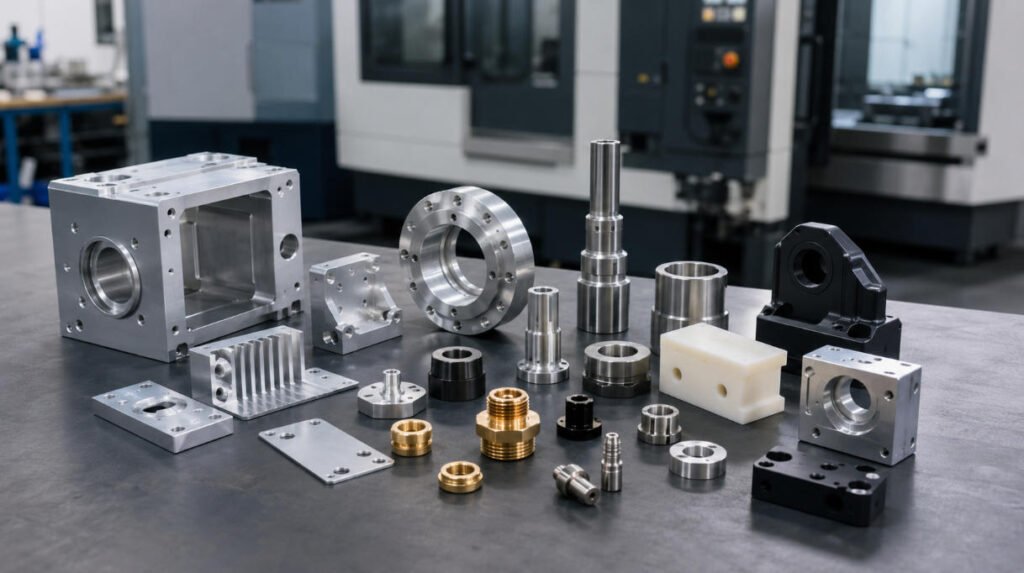
FSD Precision supports a wide range of custom CNC machined parts for industrial, automotive, electronics, robotics, medical device, new energy, and equipment manufacturing projects.
Common parts include:
- Aluminum housings and enclosures
- Heat sinks and thermal components
- Motor housings and servo motor parts
- Connector housings and precision fittings
- Stainless steel shafts and bushings
- Brass and copper components
- Precision brackets and mounting plates
- Engineering plastic parts
- CNC post-machined die casting parts
You can also view related product examples on our custom CNC machined parts page.
CNC Milling, Turning and Post-Machining Support
Different CNC machining methods are used depending on part geometry, tolerance requirements, and production volume.
CNC milling is commonly used for housings, plates, brackets, heat sinks, fixtures, and complex surfaces. It is suitable for parts with flat surfaces, pockets, holes, slots, and multi-side features.
CNC turning is mainly used for round components such as shafts, bushings, pins, sleeves, threaded parts, and rotational parts.
In many OEM projects, CNC machining is also used as a secondary process after die casting, injection molding, extrusion, or stamping. Post-machining can improve critical dimensions, threaded holes, sealing surfaces, bearing positions, and assembly areas.
Common Materials for CNC Machining
Material selection directly affects cost, strength, weight, corrosion resistance, machining time, and surface finish. Before requesting a quotation, buyers should confirm whether the material is selected for function, appearance, cost, or availability.
| Material | Common Applications |
|---|---|
| Aluminum 6061 / 6082 / 7075 | Housings, brackets, heat sinks, structural parts |
| Stainless Steel 304 / 316 | Shafts, fittings, corrosion-resistant parts |
| Carbon Steel | Mechanical parts, brackets, structural components |
| Brass / Copper | Electrical parts, fittings, conductive components |
| POM / Delrin | Wear parts, rollers, guides, low-friction parts |
| PEEK | High-performance engineering plastic parts |
| ABS / PC / Nylon | Functional plastic prototypes and production parts |
Aluminum is often selected for lightweight structures and heat dissipation. Stainless steel is used when strength or corrosion resistance is important. Brass and copper are common for fittings and conductive parts. Engineering plastics such as POM and PEEK are useful for lightweight, low-friction, or high-performance applications.
If the material is not confirmed, FSD Precision can review the drawing and application before quotation.
Tolerances and Surface Finish: What Buyers Should Confirm
Tolerance is one of the most important details in CNC machining. Tighter tolerances usually require more machining time, more inspection work, and higher cost. In some cases, overly tight tolerances may also increase production risk.
Instead of applying tight tolerances to every dimension, buyers should clearly mark the truly critical areas, such as:
- Assembly surfaces
- Hole positions
- Threaded features
- Bearing areas
- Sealing surfaces
- Flatness or concentricity requirements
- Appearance-critical surfaces
Surface finish also needs to be confirmed before production. Common options include as-machined, sandblasting, anodizing, hard anodizing, polishing, plating, painting, and powder coating.
For parts with threaded holes, tight fits, electrical contact areas, or sealing surfaces, masking and finishing requirements should be discussed before production. You can learn more from our surface finishing services page.
CNC Machining RFQ Checklist
A clear RFQ helps reduce quotation delays and avoids misunderstandings during production. When sending a CNC machining inquiry, buyers should prepare the following information if possible:
| RFQ Information | Why It Matters |
|---|---|
| 2D drawing | Shows tolerances, threads, surface finish, and notes |
| 3D file | Helps review geometry and machining process |
| Material grade | Affects cost, lead time, strength, and finish |
| Quantity | Determines prototype, low-volume, or production pricing |
| Surface finish | Affects process route and final dimensions |
| Critical dimensions | Helps inspection planning |
| Application | Helps the supplier understand the working environment |
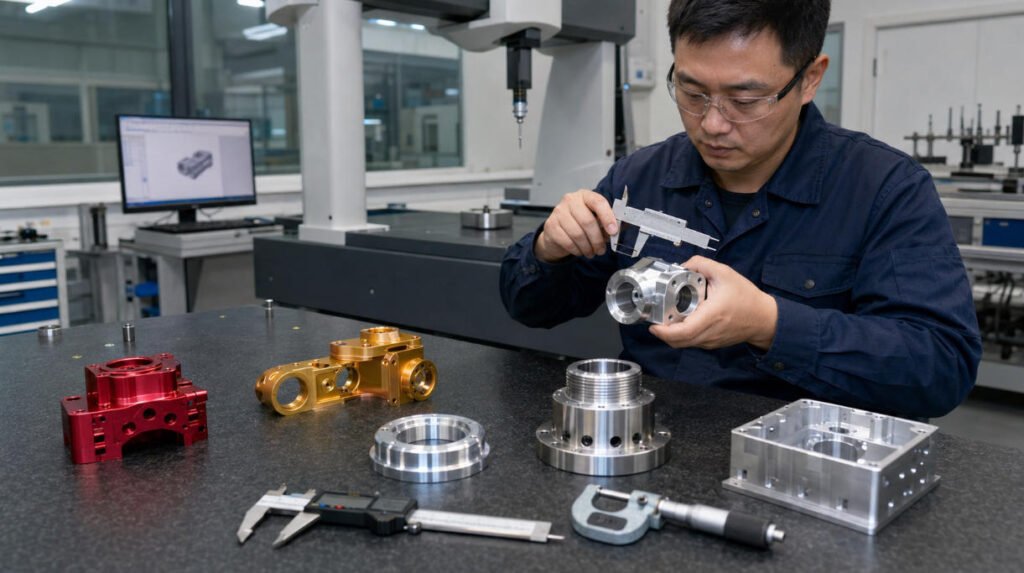
| Inspection requirements | Confirms reports, CMM, FAI, or material certificates |
If drawings are not complete, samples, photos, part numbers, or application details can still help with initial review.
You can also use our RFQ checklist to prepare your project information before quotation.
Need CNC machined parts for your next OEM project?
Send your drawings to FSD Precision for engineering review and quotation.
Why Source CNC Machined Parts from China?
Many OEM buyers source CNC machined parts from China because of mature manufacturing capacity, flexible production support, competitive cost, and access to related processes such as die casting, injection molding, stamping, surface finishing, and assembly.
However, sourcing from China should not be based only on the lowest price. A better supplier should provide clear communication, drawing review, material confirmation, inspection support, and stable follow-up from RFQ to delivery.
For international OEM projects, small details matter. A missing tolerance, unclear surface finish, or unconfirmed material grade may lead to assembly problems later. This is why engineering review before quotation is important.
Why Work With FSD Precision?
FSD Precision is a China-based OEM manufacturing partner supporting custom metal and plastic parts. Our service covers CNC machining, die casting, injection molding, stamping, surface finishing, assembly, packaging, and export delivery.
For CNC machining projects, we support:
- Drawing and manufacturability review
- CNC milling and turning
- Metal and engineering plastic machining
- Prototype and low-volume production
- Repeat production support
- CNC post-machining after casting or molding
- Surface finishing coordination
- Inspection and export packaging
Instead of treating CNC machining as only a cutting process, we review each project based on material, tolerance, quantity, finish, inspection, and final application.
FAQ
What is custom CNC machining?
Custom CNC machining is a manufacturing process that uses computer-controlled machines to cut metal or plastic materials into parts based on drawings, 3D files, samples, or technical requirements.
What materials can be CNC machined?
Common CNC machining materials include aluminum, stainless steel, carbon steel, brass, copper, POM, PEEK, ABS, PC, nylon, and other engineering plastics.
Can CNC machining be used for both prototypes and production?
Yes. CNC machining is suitable for prototypes, low-volume production, engineering validation, and repeat production parts.
What files are needed for CNC machining quotation?
A complete RFQ usually includes 2D drawings, 3D files, material grade, quantity, surface finish, tolerance requirements, and inspection needs.
How do I choose between CNC milling and CNC turning?
CNC milling is commonly used for housings, plates, brackets, and complex shapes. CNC turning is used for round parts such as shafts, bushings, pins, and sleeves. Some parts may require both processes.
Conclusion
Choosing a CNC machining supplier is not only about comparing unit prices. For OEM buyers, the better question is whether the supplier can understand the drawing, control critical dimensions, support the right material and finish, provide inspection when needed, and communicate clearly from RFQ to delivery.
If you are sourcing custom CNC machined metal or plastic parts, FSD Precision can review your drawings, samples, materials, tolerances, and project requirements before quotation.
Contact FSD Precision to start your CNC machining project.
Need help sourcing custom OEM parts?
Send drawings, samples, part numbers, material requirements, quantity, and application details for engineering review.