
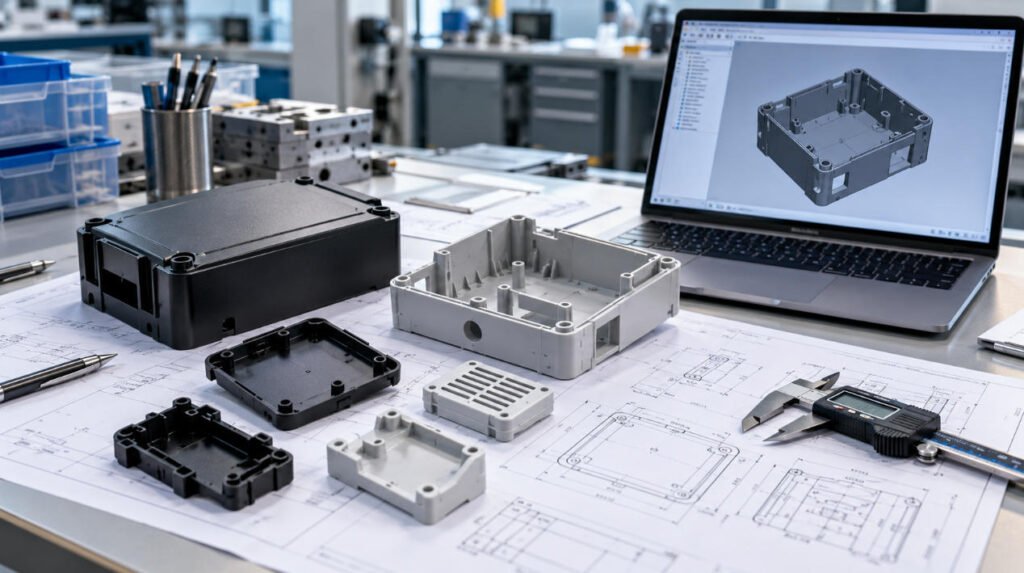
An injection molding RFQ requires more than a 3D model and a target unit price. For custom OEM plastic parts, suppliers need clear information about materials, tooling, production volumes, tolerances, and quality expectations.
Missing specifications can lead to inconsistent quotations, unexpected tooling costs, and engineering changes after a project begins.
This practical guide helps engineers and purchasing teams prepare complete quotation packages, compare supplier proposals, and identify potential risks before tooling starts.
Quick Summary
- Prepare complete technical files: Provide a 3D CAD model in STEP format and a 2D PDF drawing with critical dimensions, GD&T, and surface requirements.
- Define material and volume: Specify the commercial resin grade, application conditions, initial quantity, and estimated annual demand.
- Compare the full quotation: Evaluate tooling investment, unit pricing, inspection, secondary operations, and commercial terms separately.
1. Prepare CAD Files and Engineering Drawings
A 3D CAD model allows suppliers to review geometry, wall thickness, ribs, bosses, undercuts, and potential tooling requirements. A 2D drawing defines critical manufacturing specifications.
Recommended RFQ files:
- 3D CAD: STEP (.step/.stp) or another agreed format
- 2D drawing: PDF with dimensions, tolerances, and GD&T
- Revision: Latest approved drawing version
- Critical features: Fits, locating holes, sealing surfaces, and functional dimensions
- Assembly information: Mating parts or relevant assembly drawings
- Surface requirements: Cosmetic areas and finish specifications
If the design is not finalized, identify which features are fixed and which may be adjusted during engineering review.
Our Injection Molding DFM Guide explains how design features influence moldability before tooling begins.
2. Specify the Resin Grade and Application Requirements
Material selection affects shrinkage, dimensional stability, mechanical performance, and project cost.
A general material description such as ABS, PC, or nylon may not be sufficient because different grades can have different processing characteristics.
Where available, specify the commercial resin grade, along with:
- Required color and appearance
- Mechanical and thermal performance
- Chemical or moisture exposure
- Flame-rating or regulatory requirements, where applicable
- Reinforcement or filler requirements
If the resin is not finalized, provide the application conditions and performance requirements so the supplier can discuss suitable alternatives.
See our Injection Molding Materials Guide for additional material-selection considerations.
3. Define Production Volume and Tooling Strategy
Production volume influences tooling investment, cavity configuration, and recurring part costs.
Include the initial order quantity, estimated annual demand, repeat-order expectations, and anticipated product lifecycle in your RFQ.
Prototype / Bridge Tooling vs. Production Tooling
Prototype / Bridge Tooling: May suit design validation, market testing, or transitional production. Tooling selection depends on part geometry, resin, quantity, and quality requirements.
Production Tooling: Is generally evaluated for sustained manufacturing, with attention to mold construction, cavity configuration, maintenance, and production efficiency.
Tooling material alone does not determine mold life. Resin characteristics, reinforcement, operating conditions, and maintenance also matter.
Single-Cavity vs. Multi-Cavity Mold Cost
A multi-cavity mold can produce multiple parts per cycle, potentially improving output at suitable volumes. However, it generally requires additional tooling investment and technical evaluation.
The right configuration depends on production demand, part complexity, and total project economics.
4. Identify Critical Tolerances and Quality Requirements
Not every molded feature requires the same dimensional control.
Identify dimensions affecting assembly, alignment, sealing, movement, or functional performance.
Important requirements include:
- Critical dimensions and GD&T
- Datum references
- Inspection methods and documentation
- Cosmetic acceptance criteria
- Functional testing, where required
Measurement conditions may also need clarification for flexible or moisture-sensitive plastic parts.
Avoid applying unnecessarily tight tolerances across the entire drawing without considering their functional importance.
Our Injection Molding Tolerances Guide explains how shrinkage, geometry, and inspection affect dimensional requirements.
5. Clarify Surface Finish and Secondary Operations
Injection molded parts may require additional operations, including:
- Molded textures and color matching
- Painting, coating, or printing
- Threaded inserts
- Assembly
- Special packaging
Identify visible surfaces and restrictions on gate marks, ejector marks, or parting lines.
These requirements should be included in the quotation scope rather than assumed to be covered by the basic molded-part unit price.
6. Injection Molding RFQ Checklist
Use the following checklist to prepare a consistent technical and commercial package for suppliers.
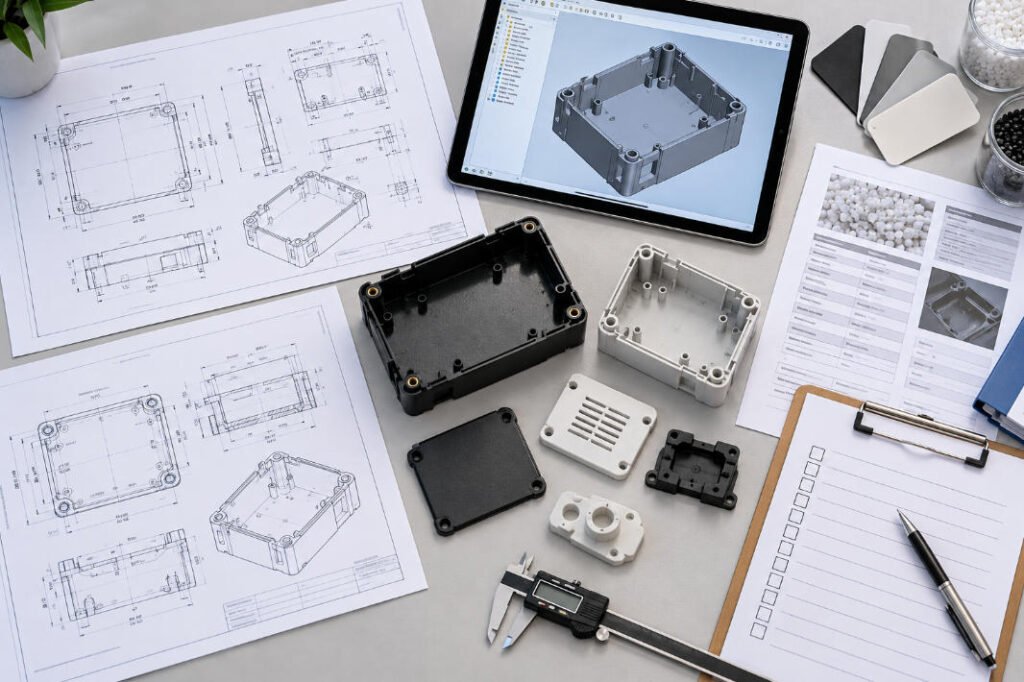
Free Resource: Injection Molding RFQ Checklist
Need a practical template for your next OEM plastic parts project? Use our Excel checklist to organize technical files, material specifications, tooling requirements, production quantities, and quality expectations.
Excel download link to be added after the template is uploaded to the website.
| RFQ Item | Information Required | Suggested Format | Purpose |
|---|---|---|---|
| 3D CAD Model | Complete part geometry | STEP / STP | Geometry and tooling review |
| 2D Drawing | Dimensions, GD&T, revision | Manufacturing specifications | |
| Material | Resin type and commercial grade | Text / Datasheet | Material evaluation |
| Color / Finish | Color, texture, cosmetic surfaces | PDF / Images | Appearance requirements |
| Initial Quantity | Expected first order | Numeric | Initial pricing |
| Annual Demand | Estimated yearly volume | Numeric | Tooling and capacity planning |
| Tooling Requirements | Prototype or production scope | Text / PDF | Mold strategy |
| Critical Features | Fits, seals, locating features | Marked Drawing | Tolerance review |
| Quality Requirements | Inspection and testing scope | PDF / Text | Quality expectations |
| Secondary Operations | Inserts, finishing, assembly | Text / Drawing | Manufacturing scope |
| Packaging | Protection and packing requirements | Text / PDF | Handling requirements |
| Commercial Terms | Destination, Incoterms, target schedule | Text | Quotation conditions |
If a requirement is not finalized, mark it as TBD (To Be Determined) and explain what remains open.
7. How to Compare Injection Molding Supplier Quotations
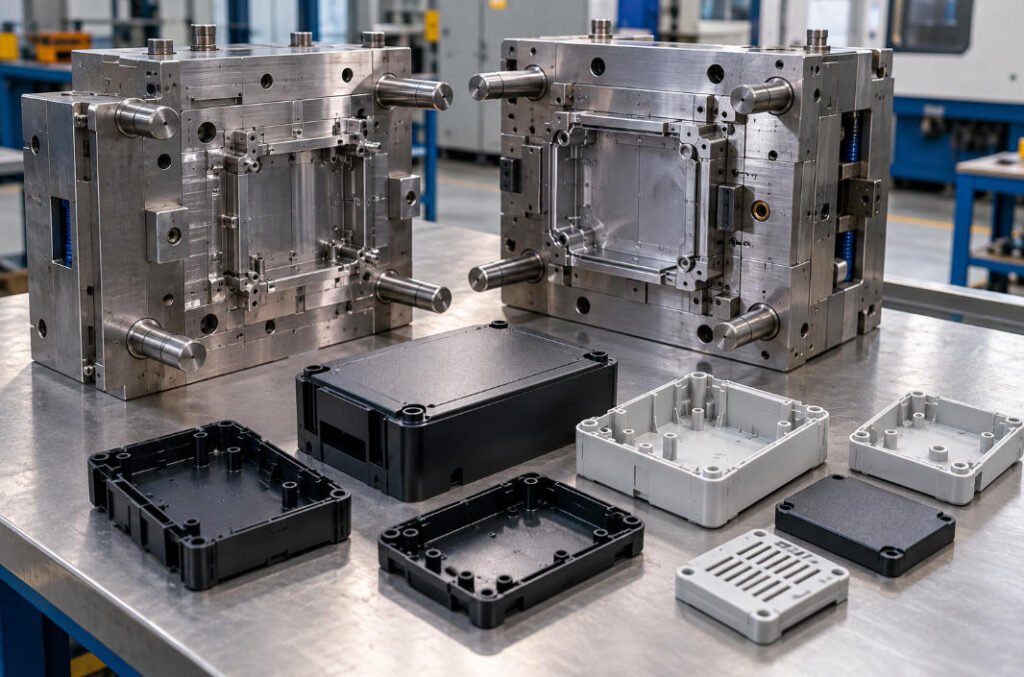
Two suppliers may quote the same part at different prices because their assumptions or included services differ.
A meaningful tooling cost vs. unit price breakdown separates upfront mold investment from recurring production expenses.
| Quotation Item | What Buyers Should Confirm |
|---|---|
| Mold Tooling Cost | Mold configuration and included work |
| Tooling Ownership | Ownership, storage, transfer, and access |
| Molded-Part Unit Price | Quantity basis and material assumptions |
| Cavity Configuration | Number of cavities and production assumptions |
| Sampling and Validation | Trial scope and approval requirements |
| Inspection | Included checks, reports, and documentation |
| Secondary Operations | Finishing, inserts, assembly, packaging |
| Mold Maintenance | Maintenance responsibilities |
| Engineering Changes | Revision approval and additional charges |
| Commercial Terms | Payment, delivery terms, quotation validity |
A lower initial mold price does not necessarily mean a lower total project cost. Compare equivalent manufacturing scopes rather than unit prices alone.
Our Injection Molding Cost Guide discusses the main factors influencing tooling and production costs.
8. Hidden Costs and Common RFQ Mistakes
Three commercial issues deserve particular attention before approving a quotation.
Tooling Ownership
Confirm who owns the mold, where it will be stored, and what conditions apply if production transfers to another supplier. Ownership and access arrangements should be documented.
Mold Maintenance
Clarify which maintenance activities are included and how additional repairs, refurbishment, or replacement components will be handled.
Engineering Change Orders (ECOs)
Design revisions after tooling approval may require mold modifications, additional sampling, or revised inspection requirements. Agree on how changes will be reviewed, approved, and priced.
Other common RFQ mistakes include using outdated drawings, omitting cosmetic requirements, and comparing quotations with different scopes.
9. What Happens After You Submit an RFQ?
A typical custom injection molding project follows this workflow:
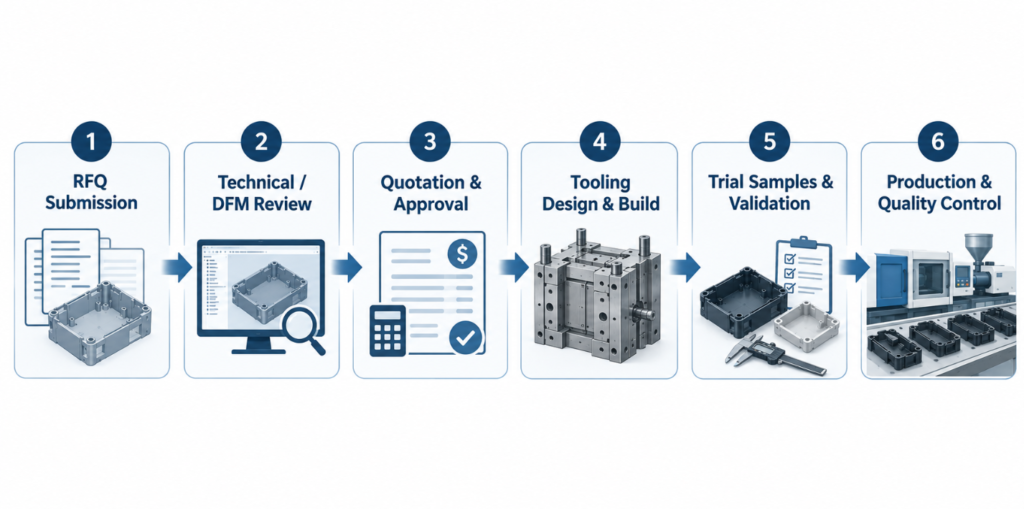
During technical review, the supplier may request clarification about material selection, geometry, tolerances, or quality requirements.
After technical and commercial approval, tooling proceeds according to the agreed scope. Trial samples are then evaluated against relevant dimensional, functional, and appearance requirements before production approval.
The exact workflow varies by project, and additional sampling or tooling adjustments may be necessary.
Our Injection Molding Defects Guide discusses common quality issues that may arise during development and production.
10. Frequently Asked Questions
What should be included in an injection molding RFQ?
Include 3D CAD files, engineering drawings, material specifications, production quantities, critical tolerances, cosmetic requirements, inspection expectations, and commercial terms.
Can I request a quote without a finalized design?
Yes. A preliminary quotation may be possible, but unresolved specifications should be identified. Pricing and tooling requirements may change as the design develops.
How do suppliers quote injection molding tooling?
Suppliers evaluate geometry, mold construction, cavity configuration, material, production requirements, and project-specific factors. The quotation should define the included tooling scope.
Is a multi-cavity mold always more economical?
No. Multi-cavity tooling may improve output at suitable volumes but generally involves higher tooling investment and additional technical considerations.
Why separate tooling costs from molded-part unit prices?
Separating upfront tooling investment from recurring part costs helps buyers understand project expenses and compare quotations accurately.
How can buyers reduce unexpected quotation changes?
Use consistent drawing revisions, define critical requirements, clarify tooling ownership and maintenance, and document how engineering changes will be handled.
11. Request an Injection Molding Quote from FSD Precision
Ready to Get an Injection Molding Quote?
Incomplete drawings, unclear tooling requirements, and missing material specifications can make quotations difficult to compare.
Send FSD Precision your 3D CAD files, engineering drawings, resin specifications, expected production volumes, and critical requirements.
Our team can review the available project information and discuss manufacturing feasibility, tooling options, DFM considerations, and quotation requirements.
Need help sourcing custom OEM parts?
Send drawings, samples, part numbers, material requirements, quantity, and application details for engineering review.