
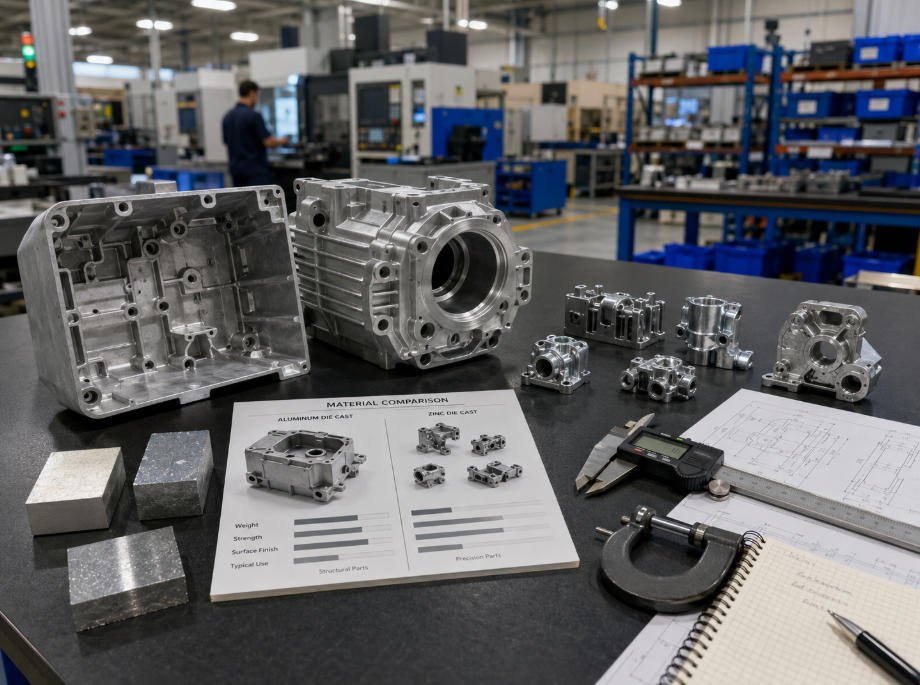
Aluminum and zinc are two of the most commonly used materials in the die casting industry.
Aluminum die casting is typically selected for lightweight structural components that require a good strength-to-weight ratio, thermal performance and corrosion resistance.
Zinc die casting is often chosen for smaller and more detailed components that require excellent dimensional stability, thin-wall capability and high-quality surface finishes.
There is no single best material for every die casting project.
The right choice depends on:
- Part size
- Mechanical requirements
- Weight requirements
- Production volume
- Surface finish expectations
- Cost objectives
- Secondary machining requirements
At FSD Precision, we help OEM customers evaluate aluminum and zinc die casting solutions based on part design, application requirements and production goals.
Learn more about our Custom Die Casting Services.
Why Material Selection Matters in Die Casting
Choosing the correct die casting material affects much more than the final part strength.
It directly influences:
- Tooling investment
- Production efficiency
- Surface finishing options
- CNC machining requirements
- Long-term product performance
For example:
An aluminum die casting housing may be preferred when weight reduction and heat dissipation are important.
A zinc die casting component may be a better choice when the design requires:
- Small detailed features
- Stable dimensions
- Thin walls
- Decorative surface finishes
Selecting the correct alloy during the early design stage helps OEM buyers reduce unnecessary tooling modifications and production risks.
If you are new to die casting, you can also read:
What Is Die Casting? Process, Materials and Applications Guide
Aluminum Die Casting Overview
Aluminum is one of the most widely used materials for die casting because it provides a good balance between weight, strength and manufacturing cost.
Key Advantages of Aluminum Die Casting
Lightweight Performance
Aluminum has a lower density compared with many structural metals, making it suitable for applications where reducing weight is important.
Typical applications include:
- Automotive components
- Electronics housings
- Industrial equipment parts
Good Strength-to-Weight Ratio
Aluminum die cast parts provide reliable structural performance while maintaining relatively low weight.
This makes aluminum suitable for:
- Structural brackets
- Motor housings
- Mechanical supports
Thermal Performance
Aluminum has good thermal conductivity, making it suitable for components that require heat dissipation.
Common examples include:
- Heat sinks
- LED housings
- Electronic enclosures
Corrosion Resistance
Aluminum naturally forms an oxide layer that helps improve corrosion resistance in many environments.
Common Aluminum Die Casting Applications
| Industry | Examples |
|---|---|
| Automotive | Motor housings, brackets, structural covers |
| Electronics | Enclosures, heat sinks, protective housings |
| Industrial Equipment | Machine components, actuator housings |
| Robotics | Lightweight structural components |
Zinc Die Casting Overview
Zinc alloys are widely used for smaller and highly detailed die casting components.
Key Advantages of Zinc Die Casting
Excellent Casting Detail
Zinc has excellent flow characteristics, allowing manufacturers to produce:
- Thin walls
- Small features
- Complex geometries
Excellent Dimensional Stability
Zinc provides consistent dimensions, making it suitable for precision components requiring reliable assembly.
Good Surface Finish Capability
Zinc die casting parts often achieve smooth surfaces and are suitable for finishing processes such as:
- Electroplating
- Painting
- Powder coating
Common Zinc Die Casting Applications
| Industry | Examples |
|---|---|
| Hardware | Locks, handles, fittings |
| Electronics | Connectors, small housings |
| Consumer Products | Decorative components |
| Industrial Products | Precision mechanical parts |
Aluminum vs Zinc Die Casting Comparison
| Feature | Aluminum Die Casting | Zinc Die Casting |
|---|---|---|
| Weight | Lightweight | Higher density |
| Strength-to-weight ratio | Excellent | Good |
| Detail capability | Good | Excellent |
| Thin-wall capability | Good | Excellent for small detailed parts |
| Surface finish | Good | Excellent |
| Dimensional stability | Good | Excellent |
| Thermal performance | Higher | Good |
| Typical applications | Structural components | Detailed precision components |
Cost and Tooling Considerations
Many buyers focus only on material price, but the total cost of a die casting project depends on multiple factors.
Tooling Investment
Die casting requires steel molds, creating an initial tooling investment.
Tooling cost depends on:
- Part complexity
- Mold design
- Number of cavities
- Expected production volume
For high-volume production, tooling costs can usually be distributed across many parts, reducing the unit cost.
Mold Life and Production Conditions
Tool life depends on:
- Alloy selection
- Tool steel
- Cooling strategy
- Maintenance
- Production conditions
Zinc die casting generally creates lower thermal stress on tooling because zinc alloys have lower melting temperatures.
Aluminum die casting requires tooling designed to handle higher thermal cycling.
Production Volume
Die casting is usually suitable for:
- Medium-volume production
- High-volume production
- Repeat manufacturing programs
For prototypes or low quantities, CNC machining may sometimes provide a more flexible solution.
Surface Finish Considerations
Material selection affects available finishing options.
Aluminum Die Casting Finishes
Common options include:
- Powder coating
- Painting
- Sand blasting
- Chemical treatments
Some aluminum die casting alloys contain higher silicon content, which may affect decorative anodizing appearance.
For premium cosmetic finishes, alloy selection should be considered during the design stage.
Zinc Die Casting Finishes
Zinc is often selected when appearance and surface quality are important.
Common finishes include:
- Chrome plating
- Nickel plating
- Electroplating
- Painting
- Powder coating
For more finishing options, visit our:
How OEM Buyers Choose the Right Material
Instead of selecting materials only based on price, OEM buyers should consider the complete application.
Choose Aluminum Die Casting When You Need:
- Lightweight design
- Structural strength
- Heat dissipation
- Larger components
- Industrial applications
Typical examples:
- Motor housings
- Equipment covers
- Automotive components
Choose Zinc Die Casting When You Need:
- Small detailed parts
- Excellent surface appearance
- Thin-wall features
- Dimensional stability
Typical examples:
- Connectors
- Hardware components
- Precision mechanical parts
Die Casting Design Considerations
Material selection should always be combined with proper part design.
Good design helps improve casting quality and reduce manufacturing risks.
Uniform Wall Thickness
Consistent wall thickness improves:
- Metal flow
- Cooling stability
- Dimensional consistency
Sudden changes in thickness may increase risks of shrinkage and internal defects.
Draft Angles
Proper draft angles help:
- Smooth part ejection
- Reduce mold wear
- Improve production efficiency
Fillets and Ribs
Proper radii and ribs improve:
- Metal flow
- Structural strength
- Part reliability
Die Casting vs CNC Machining
OEM buyers often compare die casting and CNC machining when selecting a manufacturing process.
| Die Casting | CNC Machining | |
|---|---|---|
| Production volume | Medium/high volume | Prototype and low-volume production |
| Tooling | Requires mold tooling | No mold required |
| Unit cost | Lower at scale | Higher for large quantities |
| Geometry | Complex repeat production shapes | Highly flexible custom parts |
| Material waste | Lower material waste | More material removal |
For many projects, the best solution is a combination:
Die Casting → CNC Machining → Surface Finishing → Inspection
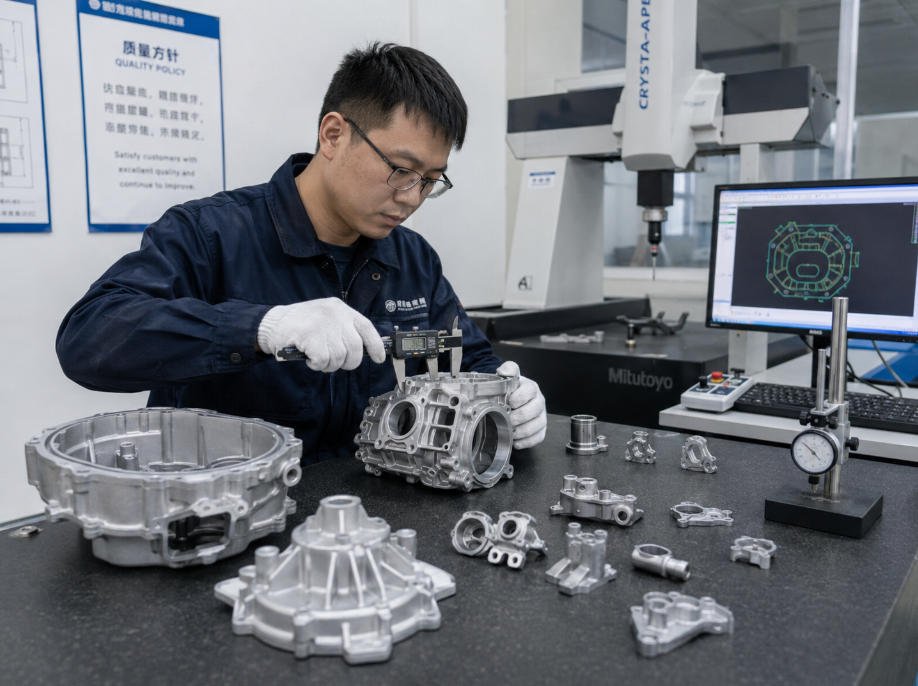
Die casting creates the near-net-shape component efficiently.
CNC machining is then used for precision features such as:
- Bearing bores
- Threads
- Assembly surfaces
- Critical tolerance areas
Learn more about our:
How to Choose the Right Die Casting Manufacturer
Choosing a die casting supplier requires more than checking whether a company owns casting equipment.
OEM buyers should evaluate:
Tooling Capability
A reliable supplier should understand:
- Mold design
- Tool maintenance
- Production requirements
DFM Engineering Support
A capable partner should help identify:
- Wall thickness problems
- Metal flow issues
- Potential casting defects
- Manufacturing risks
Post-Machining Capability
Many die cast parts require:
- CNC machining
- Drilling
- Tapping
- Precision finishing
An integrated supplier can simplify project management.
Inspection Capability
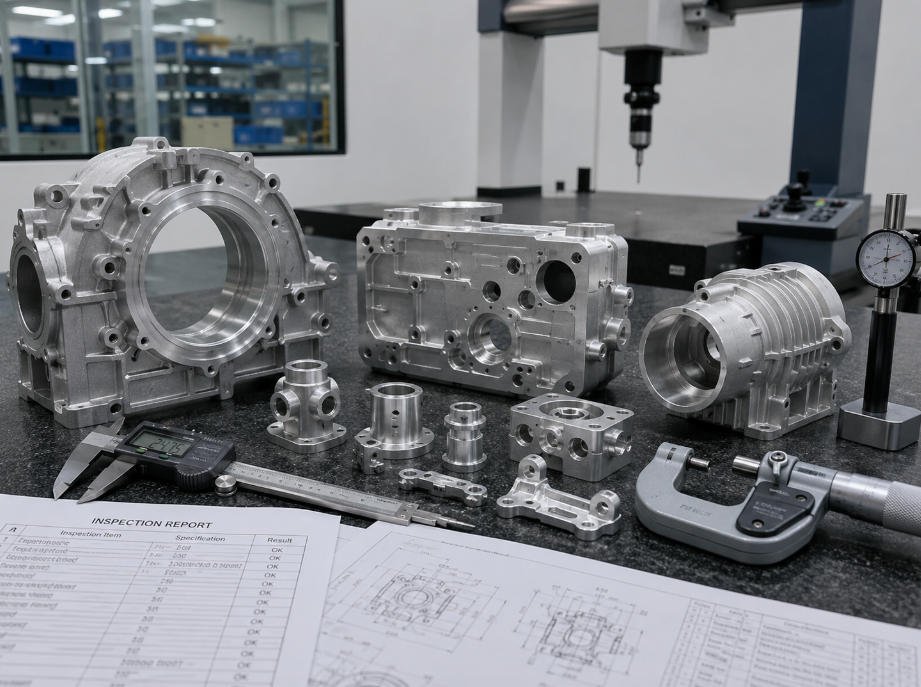
Important quality controls include:
- Dimensional inspection
- CMM measurement
- Material verification
- Visual inspection
Export Experience
For global OEM customers, experience with:
- Packaging
- Documentation
- International shipping
is also important.
Why Choose FSD Precision for Die Casting Projects?
FSD Precision supports OEM customers with complete manufacturing solutions from engineering review to final delivery.
Our capabilities include:
- Die casting project evaluation
- Aluminum and zinc die cast parts
- Tooling coordination
- CNC post-machining
- Surface finishing
- Quality inspection
- Export support
Our engineering team helps customers evaluate:
- Material selection
- Part design
- Production volume
- Tolerance requirements
- Finishing requirements
We focus on building reliable manufacturing processes, not simply producing cast parts.
FAQ
Which is better, aluminum or zinc die casting?
Neither material is universally better.
Aluminum is usually preferred for lightweight structural components, while zinc is often selected for detailed parts requiring excellent surface finish and dimensional stability.
Is zinc die casting cheaper than aluminum die casting?
The total cost depends on:
- Material
- Tooling
- Production volume
- Part complexity
- Finishing requirements
Is aluminum die casting stronger than zinc?
Aluminum generally provides a better strength-to-weight ratio, while zinc provides excellent hardness, detail capability and dimensional stability.
Can die cast parts be CNC machined?
Yes.
Many OEM die cast parts require CNC machining for:
- Precision holes
- Threads
- Assembly surfaces
- Tight tolerance areas
What information is needed for a die casting quote?
A complete RFQ should include:
- 3D CAD files
- 2D drawings
- Material requirements
- Quantity
- Surface finish requirements
- Critical tolerances
- Annual production volume
Before requesting a quotation, review our:
Conclusion
Aluminum and zinc are both widely used die casting materials, but they serve different manufacturing needs.
Aluminum die casting is often the better choice for lightweight structural components requiring strength and thermal performance.
Zinc die casting is often preferred for smaller, detailed components requiring excellent surface finish and dimensional stability.
The best material choice depends on:
- Part design
- Production volume
- Application requirements
- Cost objectives
FSD Precision helps OEM customers evaluate die casting materials, manufacturing processes and finishing requirements to develop reliable production solutions.
Ready to choose the right die casting material for your project?
Send your CAD files and requirements to FSD Precision for engineering review and quotation.
Need help sourcing custom OEM parts?
Send drawings, samples, part numbers, material requirements, quantity, and application details for engineering review.