
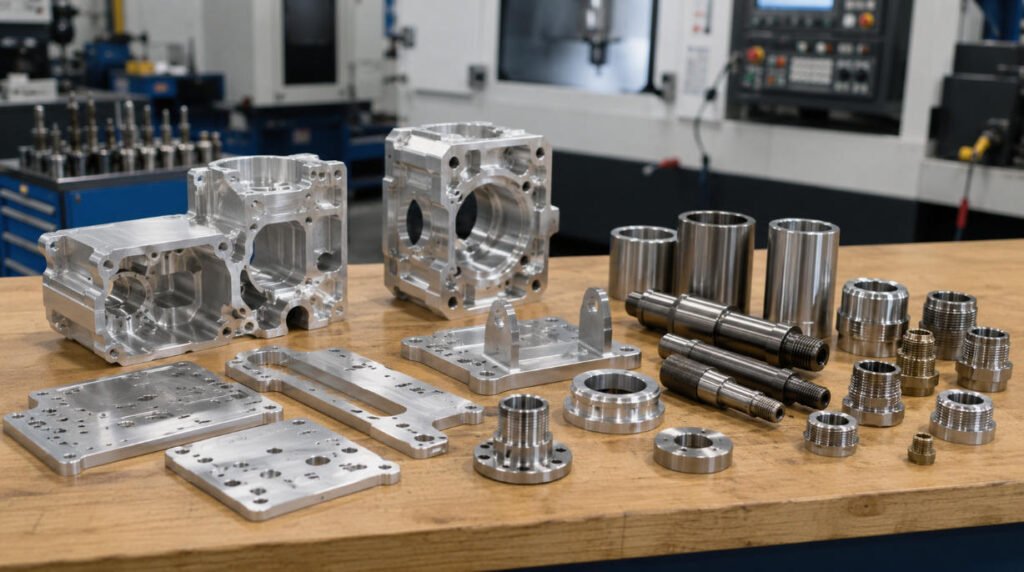
CNC milling and CNC turning are two common CNC machining processes used to produce custom metal and plastic parts. The main difference is how the material is cut. CNC milling uses a rotating cutting tool to machine a fixed workpiece, while CNC turning rotates the workpiece and uses a cutting tool to shape round or cylindrical features.
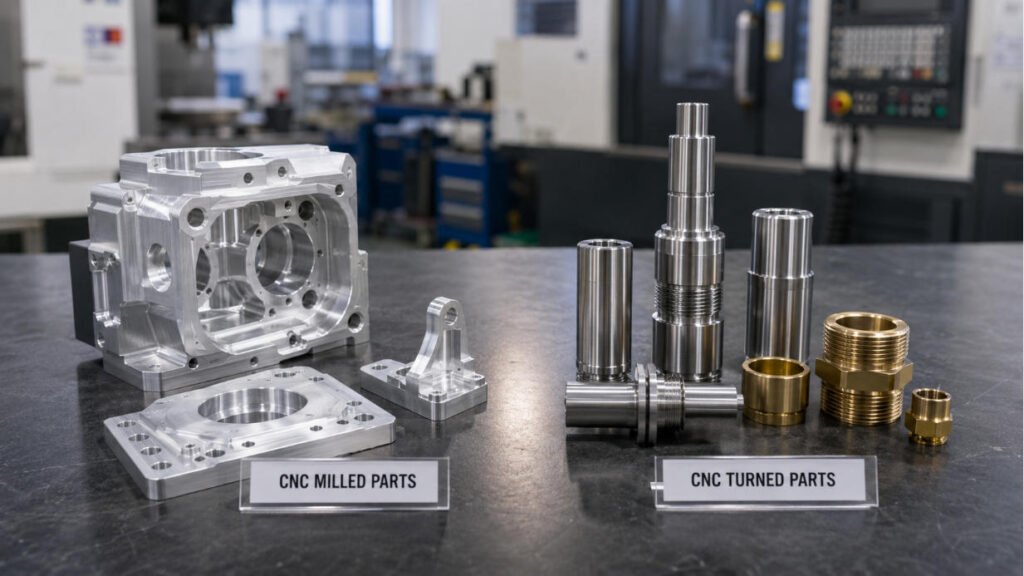
For OEM buyers, CNC milling is usually better for housings, plates, brackets, pockets, slots, holes and complex surfaces. CNC turning is more suitable for shafts, bushings, sleeves, pins, spacers, round fittings and threaded components.
In many real projects, one custom part may require both milling and turning. The best process depends on the part geometry, material, tolerance, surface finish, quantity and final application.
FSD Precision provides CNC machining services for custom OEM metal and plastic parts, including CNC milling, CNC turning, post-machining, surface finishing, inspection and export-ready delivery.
What Is CNC Milling?
CNC milling removes material from a fixed workpiece using a rotating cutting tool. The tool moves along different directions to create flat surfaces, holes, pockets, slots, steps, chamfers and more complex shapes.
CNC milling is commonly used for parts such as:
- Aluminum housings and enclosures
- Equipment brackets
- Mounting plates
- Heat sinks
- Connector housings
- Mold inserts
- Precision blocks
- Engineering plastic components
For example, an aluminum equipment housing may require internal pockets, side holes, threaded holes and flat sealing surfaces. These features are typically produced by CNC milling because the part has multiple flat and complex surfaces.
CNC milling can be used for aluminum, stainless steel, brass, copper, carbon steel, POM, PEEK, ABS, PC, nylon and other engineering materials.
For more information, visit our CNC milling service page.
What Is CNC Turning?
CNC turning removes material while the workpiece rotates. The cutting tool moves along the rotating part to create round shapes, different diameters, grooves, threads, tapers and smooth cylindrical surfaces.
CNC turning is commonly used for parts such as:
- Shafts
- Bushings
- Sleeves
- Pins
- Spacers
- Round flanges
- Threaded connectors
- Precision rollers
For example, a stainless steel shaft may require several outer diameters, grooves, external threads and bearing surfaces. These features are usually more suitable for CNC turning because the part is mainly round and follows a center axis.
For round parts, turning is often more efficient than milling because the rotating workpiece naturally creates cylindrical geometry.
You can learn more from our CNC turning service page.
CNC Milling vs CNC Turning: Key Differences
The easiest way to choose between milling and turning is to look at the part shape.
If the part is mostly flat, square, box-shaped or has complex side features, CNC milling is usually the right starting point. If the part is mostly round, cylindrical or shaft-like, CNC turning is usually more suitable.
| Item | CNC Milling | CNC Turning |
|---|---|---|
| Main movement | Cutting tool rotates | Workpiece rotates |
| Best for | Flat, square, box-shaped and complex parts | Round, cylindrical and shaft-type parts |
| Common parts | Housings, brackets, plates, heat sinks | Shafts, bushings, sleeves, pins |
| Typical features | Pockets, slots, holes, side faces, complex surfaces | Diameters, grooves, threads, tapers |
| Materials | Metals and engineering plastics | Metals and engineering plastics |
| Typical cost factors | Setups, tool paths, complexity, machining time | Diameter, length, thread details, tolerance |
| Best use case | Parts with multiple faces or complex geometry | Parts with rotational geometry |
This comparison is useful during early RFQ review. However, the final process should still be confirmed based on the 2D drawing, 3D file, material, tolerance and surface finish requirements.
When One Part Needs Both Milling and Turning
Many OEM parts are not purely square or purely round. A shaft may need milled flats or side holes. A round flange may need drilled bolt patterns. A housing may need precision bored features after milling.
Typical examples include:
- Shaft parts with keyways or cross holes
- Bushings with milled slots
- Round flanges with bolt holes
- Housings with precision bores
- Die casting parts requiring CNC post-machining
- Plastic components with both round and flat features
For these parts, the supplier should review the complete geometry and choose a practical machining route. Depending on the part design, this may involve separate turning and milling operations, or a combined machining process when suitable.
The goal is not always to use the most advanced machine. The better goal is to choose a stable, cost-effective process that can meet the drawing requirements and support repeat production.
How to Choose the Right CNC Process Before RFQ
Before sending an RFQ, buyers can make an initial judgment from the part features.
| Part Feature | Recommended Process |
|---|---|
| Mainly square, flat or box-shaped | CNC Milling |
| Pockets, slots, side holes or complex surfaces | CNC Milling |
| Mainly round or cylindrical | CNC Turning |
| Different outer diameters, grooves or threads | CNC Turning |
| Round part with flats, side holes or keyways | Turning + Milling |
| Housing with precision round features | Milling + boring / turning review |
| Not sure from the drawing | Send drawings for engineering review |
This table does not replace a full manufacturability review, but it helps buyers understand why two similar-looking parts may require different machining routes.
For a more accurate quote, it is best to provide both 2D drawings and 3D files. If only samples or photos are available, an initial review is still possible, but dimensions, tolerances and surface finish need to be confirmed before production.
Materials, Tolerances and Surface Finish
Both CNC milling and CNC turning can be used for metal and plastic materials. Common materials include aluminum, stainless steel, carbon steel, brass, copper, POM, PEEK, nylon, ABS and PC.
Material selection affects machining time, tool wear, cost, tolerance stability and finishing results. For example, aluminum is easier to machine and often suitable for housings and brackets. Stainless steel is stronger and more corrosion-resistant, but usually takes more machining time. Engineering plastics can be useful for low-friction or lightweight parts, but they require proper cutting parameters and fixture control.
You can also read our guide on how to choose CNC machining materials.
Tolerance is another important factor. Tight tolerances should be used for critical features such as bearing bores, sealing surfaces, shaft diameters, threaded areas and assembly faces. Applying very tight tolerances to every dimension may increase cost and inspection time without improving part performance.
Surface finish should also be confirmed before quotation. Common options include as-machined, sandblasting, anodizing, hard anodizing, polishing, plating, painting, powder coating and passivation. FSD Precision can coordinate surface finishing services after CNC machining based on project requirements.
CNC Milling and Turning RFQ Checklist
A clear RFQ helps reduce quotation delays and avoids misunderstanding during production. For CNC milling or CNC turning projects, buyers should prepare the following information when possible:
| RFQ Information | Why It Matters |
|---|---|
| 2D drawing | Shows tolerances, threads, surface finish and notes |
| 3D file | Helps review geometry and machining route |
| Material grade | Affects cost, lead time and machining method |
| Quantity | Determines prototype, low-volume or batch pricing |
| Critical dimensions | Helps plan machining and inspection |
| Surface finish | Affects final dimensions and appearance |
| Application | Helps supplier understand the working environment |
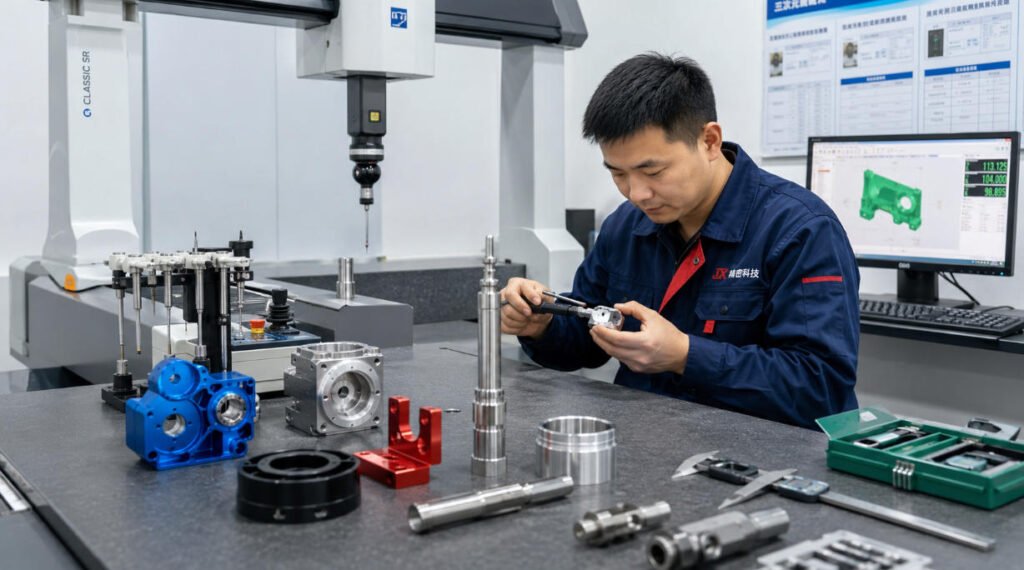
| Inspection requirements | Confirms whether reports, CMM or certificates are needed |
Recommended file formats include STEP, STP, IGS or X_T for 3D files, and PDF or DWG for 2D drawings. If you are not sure whether a part should be milled, turned or both, sending the drawing first is the best way to start.
Need help choosing between CNC milling and CNC turning?
Send your drawings to FSD Precision for machining review and quotation.
Why Work With FSD Precision?
FSD Precision is a China-based OEM manufacturing partner supporting custom metal and plastic parts. For CNC projects, we help buyers review drawings, confirm process routes, machine parts, coordinate surface finishing, inspect critical dimensions and prepare export-ready packaging.
Our CNC support includes:
- CNC milled parts
- CNC turned parts
- Parts requiring both milling and turning
- Aluminum, stainless steel, brass, copper and engineering plastic parts
- Prototype and low-volume production
- Repeat production parts
- CNC post-machining after casting or molding
- Surface finishing and inspection support
Instead of only quoting based on part name and quantity, we review the drawing, material, tolerance, structure, surface finish and application together. This helps reduce communication gaps before production and improves delivery stability.
Inspection reports, material certificates or CMM inspection can be arranged according to project requirements.
FAQ
What is the main difference between CNC milling and CNC turning?
CNC milling uses a rotating cutting tool to machine a fixed workpiece. It is suitable for housings, plates, brackets and complex shapes. CNC turning rotates the workpiece and is mainly used for shafts, bushings, sleeves, pins and other round parts.
Is CNC turning cheaper than CNC milling?
For simple round parts, CNC turning is often more efficient. However, the final cost depends on material, size, tolerance, complexity, quantity and surface finish. The drawing should be reviewed before confirming the most suitable process.
Can one part require both CNC milling and CNC turning?
Yes. Many custom OEM parts need both processes. For example, a shaft may need milled flats or cross holes, while a housing may need precision bored round features.
Which process is better for aluminum parts?
It depends on the part shape. Aluminum housings, plates, brackets and heat sinks usually require CNC milling. Aluminum shafts, sleeves and round connectors are usually more suitable for CNC turning.
What files are needed for a CNC milling or turning quote?
A complete RFQ usually includes a 2D drawing, 3D file, material grade, quantity, tolerance requirements, surface finish and inspection needs. If drawings are not available, samples or photos can help with initial review.
Conclusion
CNC milling and CNC turning are both important CNC machining processes, but they are used for different part geometries. CNC milling is better for flat, square, box-shaped and complex parts. CNC turning is better for round, cylindrical and shaft-type parts. Many OEM components may require both processes to meet final assembly requirements.
If you are not sure which process is suitable for your custom CNC part, FSD Precision can review your drawing, material, tolerance and surface finish requirements before quotation.
Contact FSD Precision to start your CNC milling or CNC turning project.
Need help sourcing custom OEM parts?
Send drawings, samples, part numbers, material requirements, quantity, and application details for engineering review.