
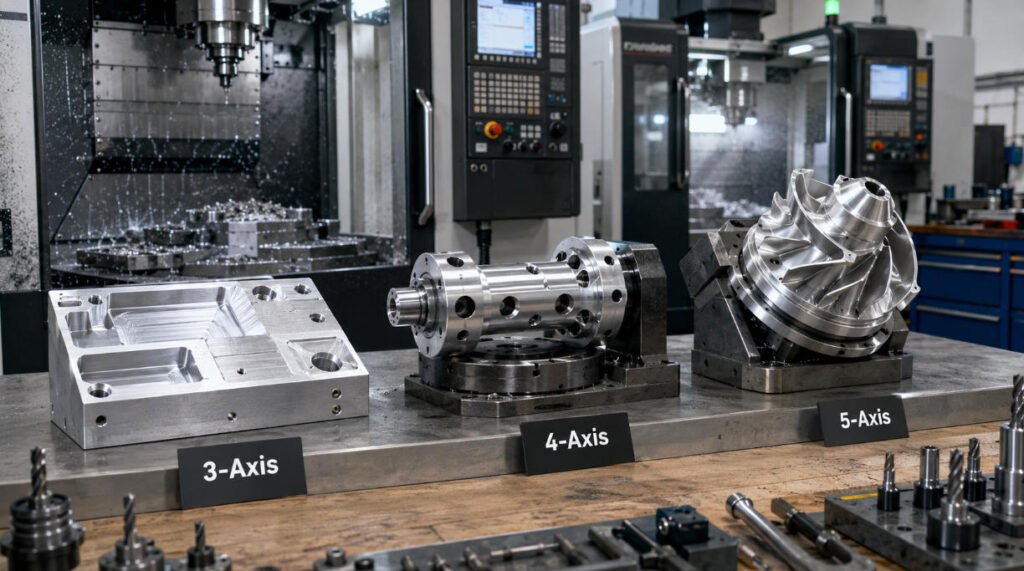
3-axis, 4-axis and 5-axis CNC machining are different machining solutions designed for different part requirements.
3-axis CNC machining is commonly used for standard parts such as plates, brackets, housings and basic mechanical components.
4-axis CNC machining adds a rotary axis, making it suitable for parts requiring machining around cylindrical surfaces or multiple indexed positions.
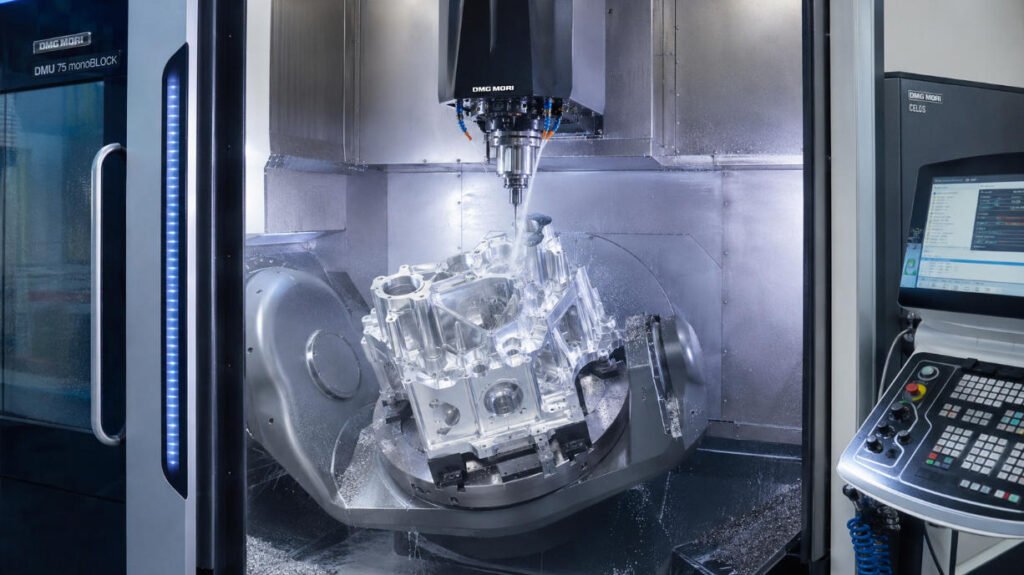
5-axis CNC machining adds two rotational axes, allowing the cutting tool or workpiece to move from multiple angles. It is ideal for complex OEM parts with curved surfaces, angled features, deep cavities and multi-sided machining requirements.
The best machining process depends on part geometry, tolerance requirements, material, production volume and cost considerations.
At FSD Precision, we help OEM customers evaluate whether 3-axis, 4-axis or 5-axis CNC machining is the most practical solution for their projects.
What Is 3-Axis CNC Machining?
3-axis CNC machining is the most common CNC milling method.
The cutting tool moves along:
- X-axis
- Y-axis
- Z-axis
to remove material from a fixed workpiece.
It is widely used for:
- Flat plates
- Mounting brackets
- Simple housings
- Mechanical blocks
- Basic pockets and holes
Advantages of 3-axis CNC machining:
- Lower machining cost
- Simple programming
- Suitable for many standard components
- Efficient for simple geometries
However, when parts require machining from multiple sides or contain angled features, additional setups may be required.
What Is 4-Axis CNC Machining?
4-axis CNC machining adds one rotational axis to traditional 3-axis machining.
The additional rotary axis allows the workpiece to rotate during machining, making it useful for parts that require machining around a central axis or multiple indexed positions.
Typical applications include:
- Cylindrical components
- Shafts
- Housings with radial features
- Parts requiring machining around multiple sides
Compared with 3-axis machining, 4-axis CNC can reduce manual repositioning for certain part designs.
However, it still has limitations when machining:
- Complex freeform surfaces
- Continuous curved geometries
- Multiple simultaneous angles
For these applications, 5-axis CNC machining provides greater flexibility.
What Is 5-Axis CNC Machining?
5-axis CNC machining adds two rotational axes to traditional X, Y and Z movements.
This allows the cutting tool or workpiece to tilt and rotate during machining.
The main advantages include:
Better Tool Access
The machine can approach difficult areas from better angles, making it easier to produce:
- Angled holes
- Deep cavities
- Complex internal features
Fewer Setups
Multiple surfaces can often be machined in fewer setups, reducing manual repositioning and improving consistency.
Better Surface Quality for Complex Shapes
For curved and 3D surfaces, maintaining the correct tool orientation can help achieve more consistent finishes.
Common applications include:
- Aerospace components
- Semiconductor equipment parts
- Medical components
- Mold components
- Complex mechanical parts
3-Axis vs 4-Axis vs 5-Axis CNC Machining Comparison
| Feature | 3-Axis CNC | 4-Axis CNC | 5-Axis CNC |
|---|---|---|---|
| Movement | X, Y, Z axes | X, Y, Z + one rotary axis | X, Y, Z + two rotary axes |
| Best for | Simple parts and standard geometries | Rotary features and indexed machining | Complex multi-face and curved parts |
| Setup requirements | More setups for complex parts | Reduced for rotary features | Fewer setups for complex geometries |
| Part complexity | Low to medium | Medium | High |
| Tool accessibility | Limited | Better than 3-axis | Best flexibility |
| Surface quality | Good for standard surfaces | Good for indexed surfaces | Better for complex 3D surfaces |
| Cost | Lowest | Medium | Highest |
The most advanced machine is not always the best choice.
The correct machining method depends on the actual part requirements.
When Should OEM Buyers Choose 5-Axis CNC Machining?
1. Complex Multi-Surface Components
When a part requires machining on several sides, repeated setups on a 3-axis machine may increase production time and alignment risks.
5-axis CNC machining is often suitable for:
- Semiconductor equipment components
- Aerospace-style parts
- Robotics components
- Medical device parts
- Industrial machinery components
2. Deep Cavities and Angled Features
Deep pockets and angled features can be challenging with traditional machining methods.
Long cutting tools may create:
- Increased vibration
- Reduced machining stability
- Lower dimensional consistency
5-axis machining allows better tool positioning and improved access to difficult areas.
3. Complex Curved Surfaces
Parts with freeform surfaces or complex 3D shapes often benefit from 5-axis machining.
Examples include:
- Impellers
- Mold components
- Complex housings
- Precision mechanical parts
When 3-Axis or 4-Axis CNC Machining Is Better
5-axis machining is powerful, but it is not always the most economical option.
3-axis CNC machining is often suitable for:
- Flat plates
- Simple brackets
- Standard housings
- Basic mechanical components
4-axis CNC machining is often suitable for:
- Cylindrical parts
- Rotary features
- Radial holes
- Indexed machining operations
Choosing the correct process helps OEM buyers control manufacturing costs while maintaining part performance.
What Factors Affect CNC Machining Cost?
The cost difference between 3-axis, 4-axis and 5-axis machining depends on several factors.
Part Complexity
Complex geometries usually require more programming and machining planning.
Number of Setups
Reducing setups can improve efficiency and consistency for complex components.
Material Selection
Different materials affect:
- Cutting speed
- Tool wear
- Machining time
Common materials include:
- Aluminum
- Stainless steel
- Brass
- Copper
- Engineering plastics
Tolerance Requirements
Critical features such as:
- Bearing areas
- Sealing surfaces
- Alignment features
may require additional machining control and inspection.
Materials Used for Multi-Axis CNC Machining
Multi-axis CNC machining can process a wide range of materials.
Aluminum
Common grades:
- Aluminum 6061
- Aluminum 7075
Applications:
- Lightweight structures
- Electronics housings
- Precision components
Stainless Steel
Common grades:
- Stainless Steel 304
- Stainless Steel 316
- 17-4 PH Stainless Steel
Applications:
- Industrial equipment
- Medical parts
- Corrosion-resistant components
Engineering Plastics
Common materials:
- PEEK
- POM (Delrin)
- Nylon
Applications:
- Wear parts
- Insulation components
- Fluid handling components
Learn more:
How to Choose CNC Machining Materials for OEM Metal and Plastic Parts
Design Considerations for Multi-Axis CNC Machining
Good part design helps improve machining efficiency and control costs.
Provide Complete CAD Files
Recommended formats:
- STEP
- STP
- IGES
- X_T
- Native CAD files
Related resource:
How to Prepare a CNC Machining RFQ: CAD Files, Drawings, Materials and Tolerances Checklist
Define Critical Tolerances Clearly
Focus tighter tolerances on functional areas:
- Bearing locations
- Assembly interfaces
- Sealing surfaces
- Alignment features
Consider Tool Accessibility
During design review, engineers should consider:
- Tool reach
- Internal radius
- Wall thickness
- Fixture requirements
Early DFM feedback can help reduce manufacturing challenges.
How FSD Precision Supports Multi-Axis CNC Projects
FSD Precision supports OEM customers with engineering-focused CNC machining solutions.
Our process includes:
- Reviewing CAD files and drawings
- Evaluating machining feasibility
- Selecting suitable CNC processes
- Confirming materials and tolerance requirements
- Coordinating surface finishing
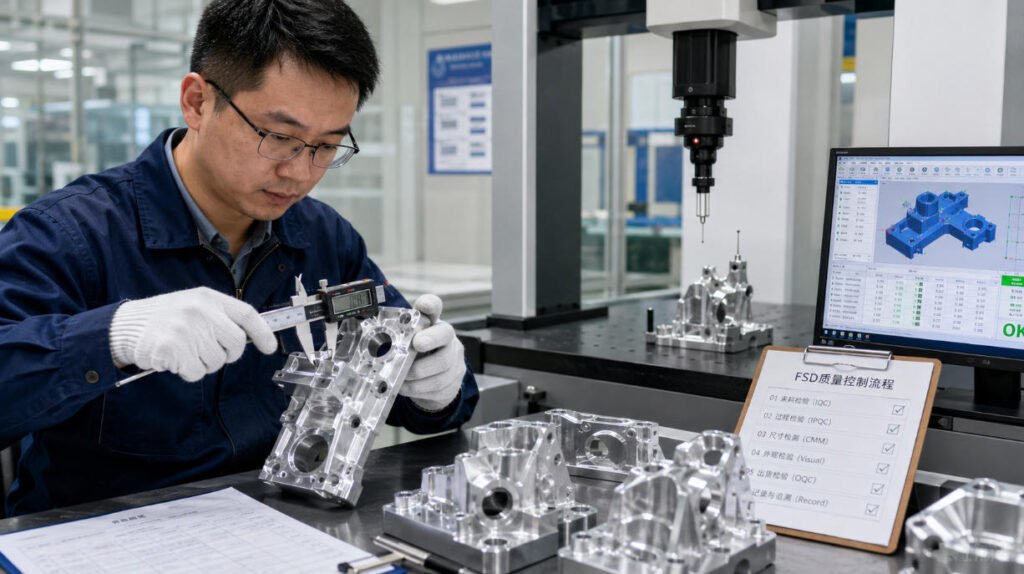
- Performing dimensional inspection
- Preparing export-ready delivery
Our CNC capabilities include:
- CNC milling
- CNC turning
- 4-axis CNC machining
- 5-axis CNC machining
- Precision machining
- Surface finishing
- Inspection support
For complex components, we help customers select the most practical manufacturing solution based on project requirements.
FAQ
Is 5-axis CNC machining always better than 3-axis machining?
No. 5-axis machining is better for complex parts requiring multiple angles, curved surfaces or fewer setups. For simple components, 3-axis machining may be more cost-effective.
What is the difference between 4-axis and 5-axis CNC machining?
4-axis machining adds one rotary axis and is suitable for rotary features and indexed machining. 5-axis machining adds two rotational axes and provides greater flexibility for complex geometries.
Is 5-axis CNC machining more expensive?
Usually, 5-axis machining requires more advanced equipment and programming. However, it can reduce total production time for complex parts by reducing setups.
What parts require 5-axis CNC machining?
Common applications include:
- Aerospace components
- Semiconductor equipment parts
- Medical components
- Mold components
- Complex mechanical parts
What files are needed for a multi-axis CNC machining quote?
A complete RFQ should include:
- 3D CAD files
- 2D drawings
- Material requirements
- Quantity
- Tolerance requirements
- Surface finish specifications
Conclusion
3-axis, 4-axis and 5-axis CNC machining each provide different advantages.
3-axis machining remains an efficient solution for standard components.
4-axis machining provides additional flexibility for rotary and indexed features.
5-axis machining is ideal for complex OEM parts requiring multiple angles, curved surfaces and fewer setups.
The best machining solution depends on part design, material, tolerance requirements and production goals.
FSD Precision helps OEM customers evaluate CNC machining requirements and select the most practical manufacturing approach.
Ready to discuss your CNC machining project?
Send your CAD files and drawings to FSD Precision for engineering review and quotation.
Need help sourcing custom OEM parts?
Send drawings, samples, part numbers, material requirements, quantity, and application details for engineering review.