
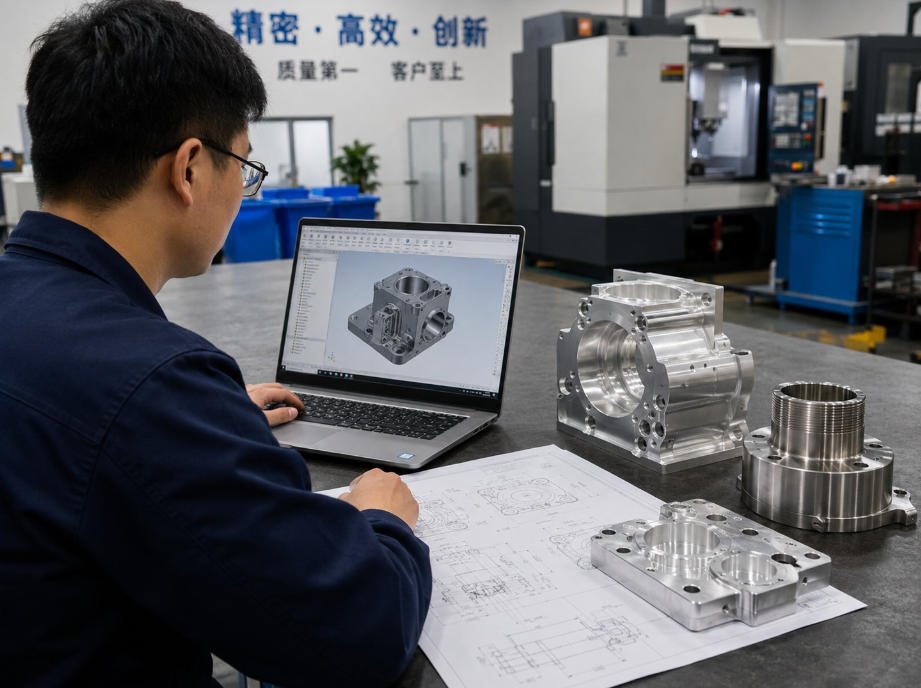
To receive an accurate CNC machining quotation, OEM buyers should prepare a clear RFQ package that includes 3D CAD files, 2D engineering drawings, material grade, quantity, tolerances, surface finish, critical dimensions, inspection requirements and application details.
A 3D CAD file helps the supplier review the part geometry and possible machining route. A 2D drawing helps confirm tolerances, threads, surface roughness, finishing notes and critical dimensions. Providing both files helps reduce guesswork and avoid unnecessary quotation delays.
FSD Precision provides CNC machining services for custom OEM metal and plastic parts, including CNC milling, CNC turning, 5-axis machining, precision machining, surface finishing, inspection and export-ready delivery.
Why CNC Machining RFQs Are Often Delayed
Many CNC machining quotations are delayed because the initial RFQ information is incomplete or unclear.
Common RFQ issues include:
- Sending only a photo without dimensions
- Providing a 3D model but no 2D drawing
- Writing only “aluminum” or “steel” without specifying the grade
- Missing quantity or annual demand
- No surface finish requirement
- No critical dimensions marked
- No information about assembly or working environment
- Unclear inspection or packaging requirements
For example, two aluminum parts may look similar, but the quote can be very different if one uses 6061 aluminum with general tolerances and another requires 7075-T6, tight tolerances on critical dimensions, hard anodizing and CMM inspection.
A clear RFQ helps the supplier review machining feasibility, cost drivers and possible production risks before quotation.
CAD File Formats for CNC Machining RFQs
3D CAD files are important because they help engineers review geometry, tool access, holes, pockets, wall thickness and possible setup requirements.
| File Format | Use in CNC Machining RFQs |
|---|---|
| STEP / STP | Widely used neutral 3D format for geometry review |
| IGES / IGS | Useful for surface and geometry exchange |
| X_T / Parasolid | Useful for solid model transfer |
| SLDPRT / IPT / CATPART | Native CAD files when available |
| STL / OBJ | Useful for reference, but not ideal alone for precision CNC machining |
| PDF / DWG / DXF | Important for tolerances, threads, notes and 2D dimensions |
For most OEM CNC machining projects, STEP or STP files are practical because they can be opened by many CAD/CAM systems and usually preserve useful solid geometry.
STL or OBJ files can help with visual reference, but they are usually not enough for precision machining quotations because they do not clearly show tolerances, threads or manufacturing notes.

Why 2D Engineering Drawings Still Matter
A 3D CAD model shows the part shape, but it does not always explain how the part should be manufactured, inspected or finished.
A 2D drawing can show:
- General tolerances
- Critical dimensions
- Thread specifications
- Surface roughness
- Flatness, concentricity or position requirements
- Surface finish notes
- Heat treatment or hardness requirements
- Masking areas before anodizing or plating
- Inspection requirements
- Material and revision information
For CNC machining, tight tolerances should be used mainly on functional areas such as bearing bores, sealing surfaces, shaft diameters, threaded holes, mating faces and alignment features. Applying tight tolerances to every dimension may increase cost and inspection time without improving part performance.
Materials, Tolerances and Surface Finish Information
Material selection affects machining cost, cutting time, tool wear, tolerance stability and finishing results. Common CNC machining materials include aluminum 6061, 7075, stainless steel 304 and 316, carbon steel, brass, copper, POM, PEEK, nylon, ABS and PC.
If you are still evaluating materials, you can read our guide: How to Choose CNC Machining Materials for OEM Metal and Plastic Parts.
Surface finish should also be confirmed before quotation. Common options include as-machined finish, bead blasting, anodizing, hard anodizing, polishing, plating, painting, powder coating and passivation. FSD Precision can also coordinate surface finishing services after CNC machining.
For threaded holes, tight-fit bores, bearing positions and sealing surfaces, masking requirements should be confirmed before finishing.
CNC Machining RFQ Checklist
Before sending a CNC machining RFQ, buyers can use the checklist below.
| RFQ Information | What to Provide | Why It Matters |
|---|---|---|
| 3D CAD model | STEP, STP, X_T, IGES or native CAD file | Helps review geometry and machining route |
| 2D drawing | PDF, DWG or DXF | Shows tolerances, threads and technical notes |
| Material grade | Aluminum 6061-T6, 7075-T6, SS304, POM, etc. | Affects cost, strength and machining time |
| Quantity | Prototype, low-volume order or annual demand | Helps determine pricing and production route |
| Surface finish | Anodizing, plating, powder coating, etc. | Affects appearance and final dimensions |
| Critical features | Marked bores, threads, sealing faces or mating areas | Helps plan machining and inspection |
| Application | Assembly use, load, working environment | Helps evaluate material and tolerance suitability |
| Inspection needs | CMM report, FAI or material certificate if required | Confirms quality documentation before production |
If your drawings are not fully complete yet, you can still send the available files for initial review. A practical supplier should be able to ask the right questions before confirming the quotation.
How FSD Precision Reviews Your RFQ
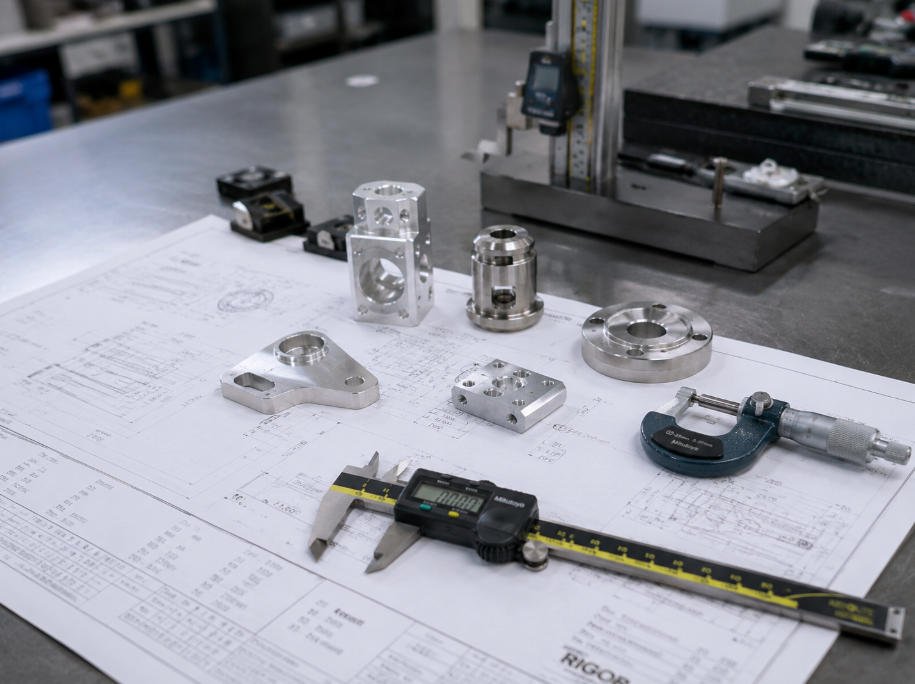
FSD Precision reviews CNC machining RFQs from both engineering and production perspectives. Our goal is to understand the part clearly before quotation.
Our RFQ review process usually includes:
- Check the 3D CAD model and 2D drawing
- Compare geometry, dimensions and drawing notes
- Confirm material grade and quantity
- Review tolerances and critical features
- Evaluate CNC milling, CNC turning or 5-axis machining needs
- Check surface finish and masking requirements
- Review inspection, packaging and export delivery needs
- Provide a practical quotation based on confirmed information
If the part has both milled and turned features, you can also read our guide: CNC Milling vs CNC Turning: Which Process Is Right for Your Custom Part?.
Common CNC RFQ Mistakes to Avoid
Some small details can affect quotation accuracy and production stability.
Common RFQ mistakes include:
- Sending only a photo without dimensions
- Sending only STL files for precision machined parts
- Not specifying the exact material grade
- Marking every dimension with tight tolerance
- Missing surface finish details
- Not marking critical assembly dimensions
- No quantity or annual demand
- No application information
- No inspection requirement
For example, “black anodizing” may not be enough if the part has threaded holes, tight-fit bores or electrical contact areas. The supplier may need to know whether certain areas should be masked before anodizing.
Why Work With FSD Precision?
FSD Precision is a China-based OEM manufacturing partner supporting custom metal and plastic parts. For CNC machining projects, we help buyers review drawings, confirm machining routes, produce parts, coordinate surface finishing, inspect critical dimensions and prepare export-ready packaging.
Our CNC support includes:
- CNC milled parts
- CNC turned parts
- 5-axis CNC machined parts
- Precision CNC machined components
- Aluminum, stainless steel, brass, copper and engineering plastic parts
- Prototype and low-volume production
- Repeat production parts
- CNC post-machining after casting or molding
- Surface finishing and inspection support
Instead of only quoting based on material name and quantity, we review the drawing, tolerance, structure, surface finish and application together. This helps reduce misunderstanding before production and supports more stable delivery.
Need help preparing your CNC machining RFQ?
Send your CAD files and drawings to FSD Precision for engineering review and quotation.
FAQ
What files are needed for a CNC machining quote?
A complete CNC machining RFQ usually includes 3D CAD files, 2D drawings, material grade, quantity, tolerance requirements, surface finish and inspection needs.
Is a 3D CAD file enough for CNC machining quotation?
A 3D CAD file is useful for geometry review, but it may not be enough for final quotation if tolerances, threads, surface finish or inspection notes are missing. A 2D drawing is recommended.
Why do CNC suppliers need 2D drawings?
2D drawings show important manufacturing and inspection information, including tolerances, threads, surface roughness, geometric tolerances, material notes and inspection requirements.
Can I request a CNC quote with only samples or photos?
Yes, an initial review may be possible with samples or photos. However, dimensions, materials and tolerance requirements should be confirmed before production.
What information helps reduce CNC machining quotation delays?
Clear 3D files, 2D drawings, material grade, quantity, surface finish, critical dimensions, application details and inspection requirements can help reduce quotation delays.
Conclusion
A well-prepared CNC machining RFQ helps suppliers review the part faster, choose a suitable machining route and provide a more practical quotation. For OEM buyers, the best RFQ package usually includes 3D CAD files, 2D drawings, material grade, quantity, tolerances, surface finish, inspection requirements and application details.
If you are preparing a custom CNC machining project, FSD Precision can review your CAD files, drawings, materials and technical requirements before quotation.
Contact FSD Precision to start your CNC machining RFQ.
Need help sourcing custom OEM parts?
Send drawings, samples, part numbers, material requirements, quantity, and application details for engineering review.